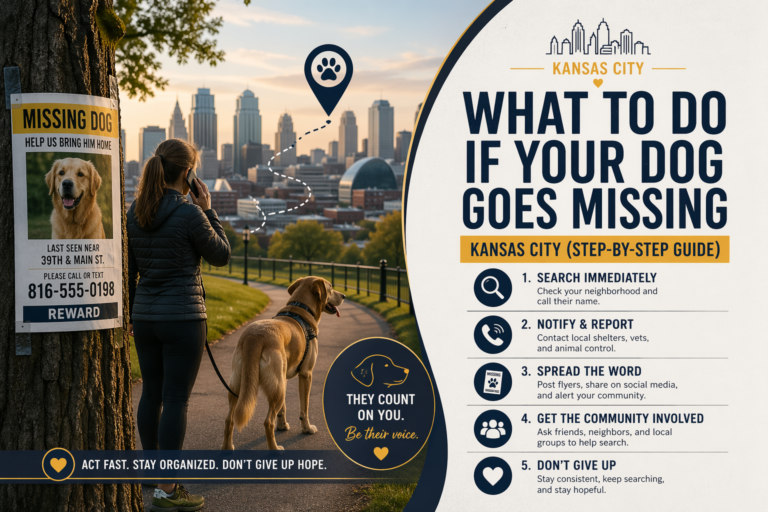
Lost Dog in Kansas City?
KC Pet Search & Rescue provides thermal drone search and guided recovery to locate and safely recover lost dogs — without pushing them farther away.
Serving Kansas City, Johnson County, Olathe, Overland Park, Lenexa, Shawnee, Liberty, Blue Springs, Independence, Lee’s Summit, and surrounding areas.
📞 Call Now: 913-707-3156Where Do Lost Dogs Usually Go in Kansas City?
If your dog is missing, understanding where they go can help — but the real priority is locating your dog before they move farther away.
Many owners search where do lost dogs usually go, where do lost dogs hide, or where should I look for my lost dog. The answer comes down to behavior, environment, and how the dog responds to fear.
Lost dogs follow patterns — but they do not stay in one place for long. The faster you locate them, the better your chances of recovery.
Step 1: Locate Your Dog — Don’t Just Guess Where They Went
The fastest way to determine where your dog actually went is with a thermal drone search. Instead of searching blindly based on patterns, thermal imaging allows large areas to be scanned quickly to detect your dog’s heat signature.
KC Pet Search & Rescue uses thermal drone search across the Kansas City metro to locate lost dogs early — before they move outside a manageable search area.
Do Lost Dogs Stay Close to Home?
Many lost dogs stay within a small area early on — often within a few blocks to about a mile.
This is why people searching where do lost dogs go first often find that early recovery is possible if action is taken quickly.
This is the most important window to locate your dog before it begins moving farther.
Where Do Lost Dogs Usually Go First?
Most dogs initially move along familiar or easy paths. This includes areas they have walked before or areas that feel safe.
- Streets near your home
- Walking routes or daily paths
- Nearby yards or open spaces
- Edges of neighborhoods
Common Places Lost Dogs Hide
Scared dogs often hide in areas that provide cover and protection. This is why people searching where do lost dogs hide during the day often overlook these spots.
- Under decks and porches
- Dense bushes or landscaping
- Tree lines and wooded edges
- Drainage areas and creeks
- Abandoned or quiet structures
- Backyards with low activity
Where Do Lost Dogs Go During the Day vs Night?
Lost dog behavior changes based on time of day:
- Daytime: hiding, staying quiet, avoiding movement
- Evening: beginning to move
- Night: increased movement and travel
- Early morning: still active but closer to hiding areas
This explains why many searches for where do lost dogs go at night show increased sightings after dark.
Why Dogs Keep Moving
Many dogs continue moving because they are scared or reacting to pressure.
- Noise or human activity
- Being chased or approached
- Unfamiliar surroundings
- Instinct to create distance
Each time the dog is pressured, the search area expands.
Important:
If your dog is moving, searching alone is not enough. Thermal drone search allows you to locate a moving dog without pushing it farther away.
Do Lost Dogs Travel Far?
Some dogs remain close, while others can travel several miles depending on fear, terrain, and time missing.
This is why searches for how far do lost dogs travel show rapidly expanding distances over time.
Why Thermal Drone Search Changes Everything
- Finds dogs hidden in brush, fields, and terrain
- Covers large search areas quickly
- Reduces pressure from ground searching
- Provides real-time location data
- Supports controlled recovery instead of chasing
KC Pet Search & Rescue uses thermal drone search across Kansas City to locate dogs quickly and accurately.
When to Get Help Finding a Lost Dog
If your dog is not found quickly or continues moving, do not wait.
Call KC Pet Search & Rescue immediately to start a structured recovery plan before the search area expands further.
Find Where Your Dog Actually Went
KC Pet Search & Rescue provides thermal drone search across Kansas City, Johnson County, Liberty, Blue Springs, Independence, and Lee’s Summit.
Thermal drone search is often the fastest way to turn uncertainty into a real location.
Call 913-707-3156 Get Help NowFinal Takeaway
Lost dogs follow patterns — but they do not stay in one place.
KC Pet Search & Rescue uses behavior strategy and thermal drone technology to locate dogs before the situation becomes more difficult.
Why Many Lost Dog Situations Get Worse in the First Few Hours
Most lost dogs are not actually trying to “run away.” In many cases, they enter a survival or panic state that changes how they respond to sound, people, vehicles, and even their owners. One of the biggest mistakes pet owners make is immediately chasing the dog after a sighting. This often pushes frightened dogs farther away from familiar territory.
At KC Pet Search & Rescue, we frequently help owners throughout Kansas City who unknowingly increased the search radius by attempting direct pursuit. A structured recovery strategy using thermal drone technology, controlled movement, sighting analysis, and behavioral search planning can dramatically improve the chances of recovery.
How Thermal Drone Searches Help Locate Lost Dogs Faster
Large wooded areas, drainage systems, golf courses, retention ponds, parks, industrial zones, and overgrown property lines can make traditional searching extremely difficult. Thermal drones allow search teams to scan large areas quickly while identifying heat signatures that are nearly impossible to detect from ground level.
KC Pet Search & Rescue deploys thermal drone systems throughout the Kansas City metro to assist with emergency lost dog recovery. These scans are especially effective during cooler evening and morning hours when heat signatures stand out more clearly against surrounding terrain.
Where Lost Dogs Commonly Hide Around Kansas City
- Creeks and drainage channels
- Wood lines behind subdivisions
- Golf courses and retention ponds
- Industrial parks and warehouses
- School property after hours
- Construction sites
- Railroad corridors
- Parks and trail systems
- Neighborhood greenbelts
- Brush-filled fence lines
Search strategy changes dramatically depending on the terrain, traffic level, and fear state of the dog. Understanding how lost dogs behave in urban versus suburban environments is one of the biggest factors in successful recovery planning.
Lost Dog Recovery Resources & Emergency Search Guides
Lost Dog Recovery Kansas City
Emergency thermal drone search and recovery services across the Kansas City metro.
Best Way To Find a Lost Dog
Step-by-step lost dog recovery strategy used during real emergency searches.
How To Find a Lost Dog at Night
Why nighttime and thermal imaging often improve search effectiveness.
How To Catch a Scared Dog
Behavior-based recovery tactics for frightened dogs that avoid people.
Where Lost Dogs Usually Go
Understand common movement patterns and hiding locations after escape.
How Far Lost Dogs Travel
Learn how fear level and environment affect travel distance.
First Hour Recovery Strategy
The most important actions to take immediately after a dog disappears.
Thermal Drone Search for Lost Pets
How thermal drone technology helps locate missing pets faster.
Johnson County Emergency Pet Recovery Hub
Main regional recovery hub for Kansas City metro search operations.
Lost Cat Recovery Questions
Indoor cat recovery behavior, thermal searches, and trapping strategies.