
KC Pet Search & Rescue provides professional lost dog recovery services throughout Kansas City using thermal drones, thermal imaging, live recovery coordination, canine behavior strategy, and emergency search operations across Kansas and Missouri.
Every missing dog situation is different. Some dogs stay hidden nearby while others continue expanding their travel radius after becoming frightened or entering survival mode. Our recovery process focuses on improving visibility, reducing guesswork, organizing sightings, and increasing the chances of safe recovery before the search area grows larger.
Thermal drone deployments for nighttime searches, fields, woods, creeks, brush, and large search areas.
Recovery strategy built around sightings, travel direction, pressure zones, and likely movement patterns.
Specialized recovery strategy for frightened dogs that avoid owners or continue running when approached.
Many recoveries happen after dark when dogs begin moving and thermal visibility improves significantly.
One of the biggest mistakes owners make is assuming their missing dog will behave normally. Fear, stress, survival instinct, traffic, weather, and environmental pressure can completely change how a dog reacts once lost.
Frightened dogs may continue expanding their travel radius for hours or even days, especially when chased or pressured by people trying to help.
Many lost dogs travel during quiet nighttime hours when traffic slows, temperatures cool, and neighborhoods become less active.
Even well-trained family dogs may avoid eye contact, ignore commands, or run from familiar people once survival mode takes over.
Lost dogs commonly move toward wooded areas, drainage corridors, creek systems, industrial zones, parks, and quiet hiding locations.
KC Pet Search & Rescue builds recovery operations around canine behavior patterns, likely movement corridors, environmental pressure, sightings, and thermal search opportunities instead of random searching.
Understanding how frightened dogs react is one of the most important factors in reducing search expansion and improving recovery outcomes across Kansas City and Johnson County.
Lost dogs often travel along creek systems, trail networks, fence lines, railroad corridors, and greenbelts throughout Kansas City and Johnson County. Identifying these movement paths early helps organize a more effective recovery strategy.
Many failed recoveries happen because frightened dogs are accidentally pressured into expanding their search radius. Once survival mode begins, traditional search methods can actually work against recovery.
Thermal drone recovery operations combine aerial visibility, thermal imaging, canine behavior analysis, and organized recovery strategy to improve search efficiency and reduce unnecessary search expansion.
Initial calls focus on escape location, sightings, behavior patterns, terrain, weather conditions, and identifying likely movement corridors.
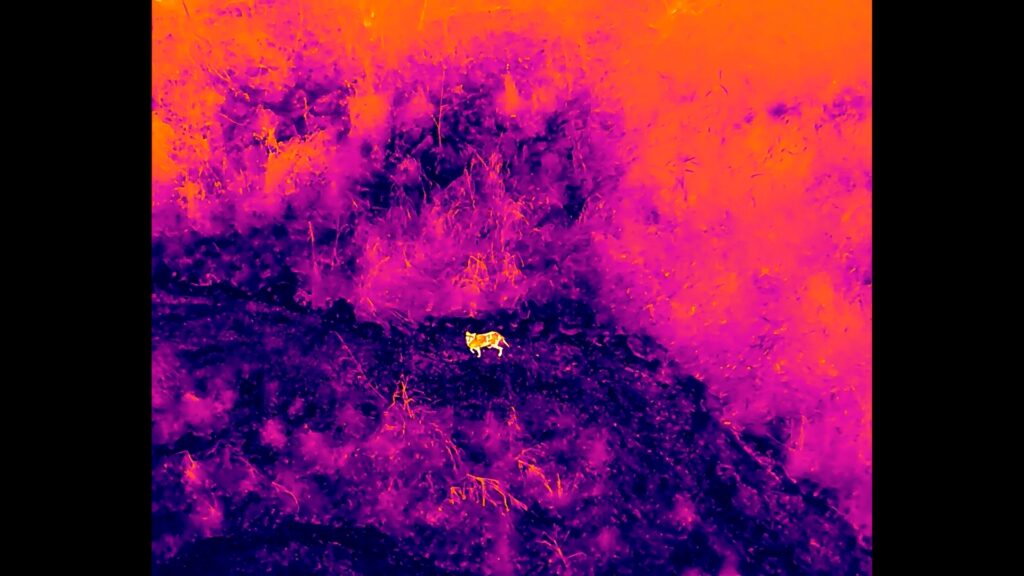
Thermal drones scan fields, parks, woodlines, creek systems, industrial areas, and large search zones for heat signatures and movement activity.
Search operations use sightings, terrain analysis, owner communication, travel direction, and movement patterns to organize recovery decisions.
Once movement patterns stabilize, recovery efforts focus on containment, calming pressure zones, and creating safe recovery opportunities.
Thermal imaging helps identify heat signatures in areas that are difficult to search visually, especially during nighttime operations when dogs are actively moving.
Fields, tree lines, creek systems, drainage corridors, parks, industrial zones, and large open areas become significantly easier to monitor from the air using thermal technology.
Lost dogs rarely move randomly. Frightened dogs often follow terrain features, quiet travel corridors, and areas that provide concealment, safety, or reduced human activity.
Creek corridors, drainage systems, and wooded greenbelts provide quiet movement paths that many lost dogs naturally follow across Kansas City neighborhoods.
Frightened dogs often move toward quieter commercial zones, storage yards, construction areas, and industrial properties with fewer people.
Railroad tracks, utility easements, fence lines, and trail systems can become natural travel routes for displaced dogs.
Large parks and open grass areas may provide temporary movement zones during nighttime travel or sighting activity.
Abandoned structures, brush piles, culverts, decks, sheds, and secluded corners are common daytime hiding locations.
Many lost dogs begin revisiting predictable food and movement routes once they settle into a repeated nighttime pattern.
Early recovery strategy often matters more than massive random search efforts. Organizing sightings quickly and understanding likely movement corridors can dramatically improve recovery efficiency.
Thermal drone visibility helps reduce uncertainty in large search zones while helping identify areas that deserve closer recovery focus.
Mapping sightings, movement direction, time of day, terrain features, and repeated activity zones helps identify likely travel behavior and containment opportunities during active recoveries.
KC Pet Search & Rescue provides thermal drone lost dog recovery services throughout the Kansas City metro, including Johnson County, Jackson County, and surrounding Kansas and Missouri communities.
One of the primary recovery regions for emergency dog searches, thermal drone deployments, nighttime recovery operations, and sighting-based containment strategy.
Recovery operations throughout Kansas City, Missouri and surrounding metro communities including Jackson County and nearby service areas.
Additional Kansas and Missouri counties supported for thermal drone pet recovery, emergency dog searches, and advanced recovery operations.
Early recovery decisions can dramatically affect search expansion, sightings, containment opportunities, and overall recovery success. Staying calm and avoiding reactive searching is often one of the most important first steps.
Chasing frightened dogs often increases fear and expands the search area significantly.
Track timestamps, direction of travel, terrain features, and repeated activity patterns.
Familiar scent items, bedding, clothing, and feeding stations can help stabilize movement patterns.
Many lost dogs become more active during quieter nighttime hours and early morning movement windows.
Early recovery planning can reduce confusion, improve containment, and organize search strategy faster.
KC Pet Search & Rescue provides thermal drone dog recovery, live recovery coordination, nighttime search operations, sighting analysis, and structured recovery strategy throughout Kansas City and Johnson County.
Explore additional lost dog recovery pages, thermal drone search services, emergency recovery hubs, and Kansas City pet recovery resources.