
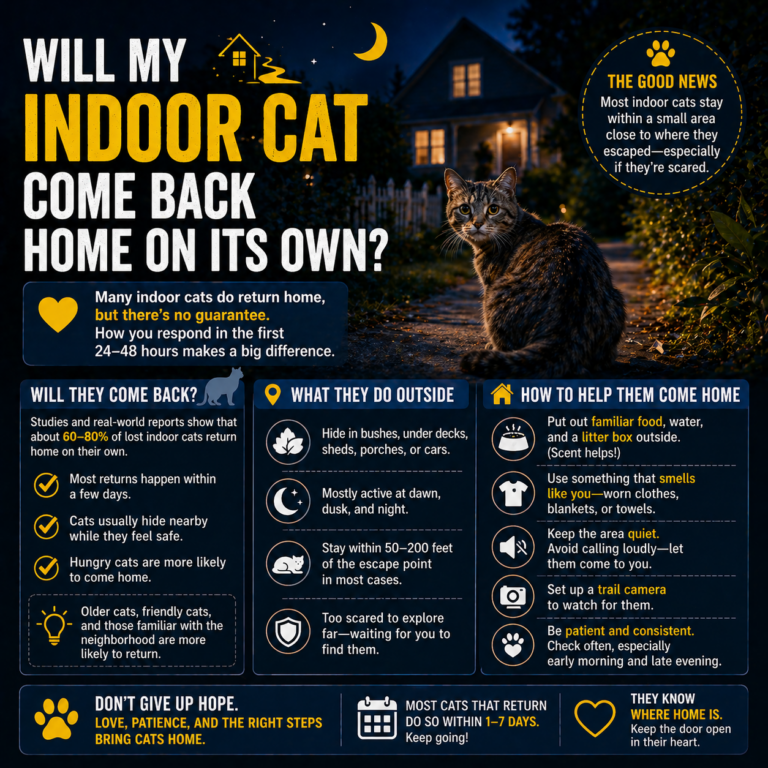
Sometimes indoor cats do come back home on their own — but many do not simply walk back like nothing happened. Most escaped indoor cats hide close, stay silent, and wait until they feel safe enough to move.
Your indoor cat may come back, especially if they stayed close and the area becomes quiet. But the better question is not, “Should I just wait?” The better question is:
“What should I do right now to make it easier for my cat to come home safely?”
Some indoor cats do return home on their own. But many escaped indoor cats are not calmly exploring. They are scared, hiding, silent, and waiting for the area to feel safe enough to move.
It is natural to hope your cat will simply come back to the door, garage, porch, or window. Sometimes that happens — especially if the cat stayed close and the environment becomes quiet.
The better plan is not panic — and it is not passive waiting. The better plan is calm, focused action based on how escaped indoor cats actually behave outside.
Escaped indoor cats usually need calm conditions, familiar scent, controlled pressure, and a recovery plan. The sooner you act correctly, the better chance you have of helping your cat come home.
When an indoor cat gets outside, they usually do not act like an outdoor cat. They often freeze, hide, and stay quiet instead of confidently traveling through the neighborhood.
An indoor cat that slips outside is usually overwhelmed by smells, sounds, open space, other animals, traffic, people, and unfamiliar movement. Their first instinct is often not to explore. Their first instinct is to hide.
That means your cat may be tucked under something, behind something, inside something, or pressed into a tight space much closer to the escape point than you expect.
Indoor cats often stay near the escape point, home scent, familiar structures, or nearby cover.
Daytime noise, traffic, people, dogs, and activity can keep a scared indoor cat hidden and silent.
Fear can override normal behavior. Your cat may know you are nearby but still refuse to move or meow.
Common hiding areas include decks, sheds, garages, crawlspaces, bushes, porches, fences, and parked vehicles.
Start where the cat got out. That area often remains the center of the recovery.
Check under decks, porches, sheds, vehicles, bushes, and tight dark spaces nearby.
Search late at night or early morning when the area is calm and your cat may feel safer.
Avoid pressure. The goal is to help your cat feel safe enough to reveal themselves or return.
This is one of the hardest parts for owners to understand. An escaped indoor cat can hear your voice, recognize you, and still stay frozen, silent, and hidden.
Inside the home, your cat may come when called, follow routines, respond to food, or run to familiar sounds. Outside, everything changes. Fear can take over fast.
A scared indoor cat is not thinking like their normal indoor self. They may choose hiding over responding, even when the owner is close.
When owners panic, they often call louder, walk farther, bring more people, or search with more pressure. But with a scared indoor cat, more pressure can make them stay hidden longer.
The goal is not to force the cat out. The goal is to create conditions that make the cat feel safe enough to move.
If your indoor cat is not coming when called, do not assume they are too far away. They may be nearby, hiding quietly, and waiting for the area to feel safe.
If you searched during the day and found nothing, that does not mean your cat is gone. Escaped indoor cats often wait until the world gets quiet before moving.
During the day, a scared indoor cat may stay tucked away because of traffic, dogs, people, lawn equipment, kids, deliveries, construction, and neighborhood activity.
When the area becomes quiet, your cat may finally feel safe enough to move, look for food, return toward the escape point, or reveal eye shine with a flashlight.
The neighborhood is quieter, fewer people are outside, and your cat may feel safer moving near home.
A bright flashlight can catch eye shine under decks, bushes, sheds, porches, fences, and parked vehicles.
Food placed carefully near the escape point may help confirm whether your cat is returning during quiet hours.
A camera can show whether your cat is coming back when no one is watching, especially overnight.
Many escaped indoor cats move when the area feels calm. Search close, search slow, and pay special attention to quiet hours.
The first night matters. Your goal is not to cover the most distance. Your goal is to keep your cat close, reduce pressure, and create a safe path back toward home.
When an indoor cat escapes, the first hours are not about running through the neighborhood yelling their name. That can create pressure and make a scared cat hide deeper.
The better move is to slow the situation down. Keep the escape point important, create familiar scent, search the closest hiding places, and use quiet hours to your advantage.
Keep a safe door, garage, porch, or familiar access point available when possible so your cat has a path back.
Place familiar bedding, worn clothing, or scent items near the escape area without creating a loud or busy scene.
Check under decks, porches, sheds, bushes, crawlspaces, garages, vehicles, and dark tight places nearby.
Search late at night or early morning with a bright flashlight and look slowly for eye shine and movement.
Food may help hold your cat in the area, but it works best when paired with a camera so you can confirm activity.
If your indoor cat is nearby, the right setup can make it easier for them to come back. The wrong pressure can make them stay hidden longer.
Most owners are trying to help, but some common reactions can accidentally add pressure. With escaped indoor cats, more noise, more people, and more movement are not always better.
Loud calling, panic, flashlights everywhere, and too many people can make a scared cat stay frozen. Calm and quiet usually works better.
If your cat appears, do not rush, grab, or chase. That can trigger flight and move them farther from the safe zone.
Many escaped indoor cats hide close. Searching too far too soon can make owners miss the most important nearby hiding spots.
The right approach is calm, close, quiet, and deliberate. Your job is to make the area safer, easier to return to, and less threatening for a scared indoor cat.
When owners slow down and work the area correctly, they often realize the cat may still be nearby.
The goal is not to force your cat to respond. The goal is to create the safest path for them to return or be recovered.
When an indoor cat escapes, the goal is not random searching. The goal is to understand the behavior, protect the escape area, confirm movement, and build the safest path home.
KC Pet Search & Rescue looks at the escape point, the cat’s indoor personality, nearby hiding areas, terrain, sightings, time missing, weather, and owner actions already taken.
From there, we help build a recovery plan that fits the case instead of guessing or copying advice from random comments.
We organize the escape point, nearby cover, likely movement, sightings, owner setup, and next steps.
Cameras can confirm whether your cat is returning during quiet hours when nobody is outside watching.
Ground thermal and drone search may help in the right terrain, timing, and visibility conditions.
If your cat is seen but will not come in, a calm trapping strategy may be the safest recovery path.
If your indoor cat got outside, the next steps matter. These resources help you understand hiding behavior, search timing, trapping strategy, and when to get recovery help.
Get help with escaped indoor cat recovery, owner guidance, cameras, trapping strategy, and search planning.
Lost Cat HelpLearn where to search, when to search, and how to work the area without pushing your cat farther into hiding.
Find Indoor CatIndoor cats usually hide close. Learn the most common places to check around the home and nearby properties.
Hiding PlacesFear can override normal behavior. Learn why your cat may hear you and still stay completely silent.
Why They HideQuiet hours matter. Learn why late night and early morning can be better for escaped indoor cat searches.
Best Search TimeIf your cat is seen but will not come in, a controlled trapping plan may be the safest way to recover them.
Cat Trapping HelpYour indoor cat may still be close, scared, and silent. KC Pet Search & Rescue helps turn panic into organized action.
Get Lost Cat Recovery HelpSome indoor cats do come back home on their own, especially if they stay close and the area becomes quiet. But many escaped indoor cats hide silently nearby and may not respond when called. Waiting should not be the whole plan.
Do not wait passively. Start taking action right away by checking close hiding areas, keeping calm access near the escape point, using familiar scent, searching during quiet hours, and considering cameras or trapping strategy if needed.
Escaped indoor cats often hide close to home. Common areas include under decks, porches, sheds, garages, crawlspaces, bushes, parked vehicles, fence lines, and nearby structures.
Fear can cause an indoor cat to freeze, stay silent, and remain hidden even when the owner is nearby. Your cat may hear you and still not feel safe enough to move.
Late night and early morning are often better because the area is quieter. Use a bright flashlight and search slowly for eye shine under decks, bushes, sheds, porches, vehicles, and other close hiding places.
Call as soon as possible if your indoor cat is missing, hiding, not responding, has not been seen, or if you are unsure what to do next. A recovery plan is better than random searching or passive waiting.
Social media can help spread the word, but an escaped indoor cat still needs a calm recovery plan. These pages help you understand where to post, what KC Pet Search & Rescue is, and why recovery is different from waiting.
Learn why Facebook and Nextdoor are useful for awareness, but not a replacement for a real missing pet recovery plan.
Read the ComparisonFind where to post a missing dog or cat in Kansas City while keeping the recovery focused and organized.
Where to PostUse county-based Facebook groups to get the word out in the right area without losing track of the recovery plan.
County GroupsWe are not an animal shelter or adoption rescue. We help owners with missing pet search, recovery planning, and field strategy.
Not a ShelterUnderstand the difference between calling shelters and building an active recovery plan for a missing dog or cat.
Recovery vs ShelterIf your indoor cat got out, you need lost cat recovery help — not just a shelter search or adoption rescue page.
Cat Recovery HelpPost online, check shelters, and tell neighbors — but do not stop there. A scared indoor cat needs calm, controlled recovery action.
Find where to post a missing dog or cat in the Kansas City area.

When a dog or cat goes missing, one of the first things owners hear is, “Post it on Facebook.” That advice can help — but only if the owner knows where to post.
KC Pet Search & Rescue built this lost pet Facebook directory cluster to help Kansas City area owners find lost and found pet groups, county posting resources, city pages, directory guides, and posting help faster.
Use the directory to spread the word, then keep every sighting organized so the case can move from social media awareness into a real recovery plan.
Open Lost Pet Facebook Directory