
Free Lost Pet Command CenterCreate a missing-pet case and use community recovery tools
Emergency Cat Help
KC Pet Search & Rescue
Call Now 913-915-2800
Emergency Dog Help
KC Pet Search & Rescue
Call Now 913-915-2800
Free Lost Pet Command CenterCreate a missing-pet case and use community recovery tools
Emergency Cat Help
Emergency Dog Help
How far will an indoor cat go after escaping — KC Pet Search & Rescue
Escaped Indoor Cat — Kansas City Area

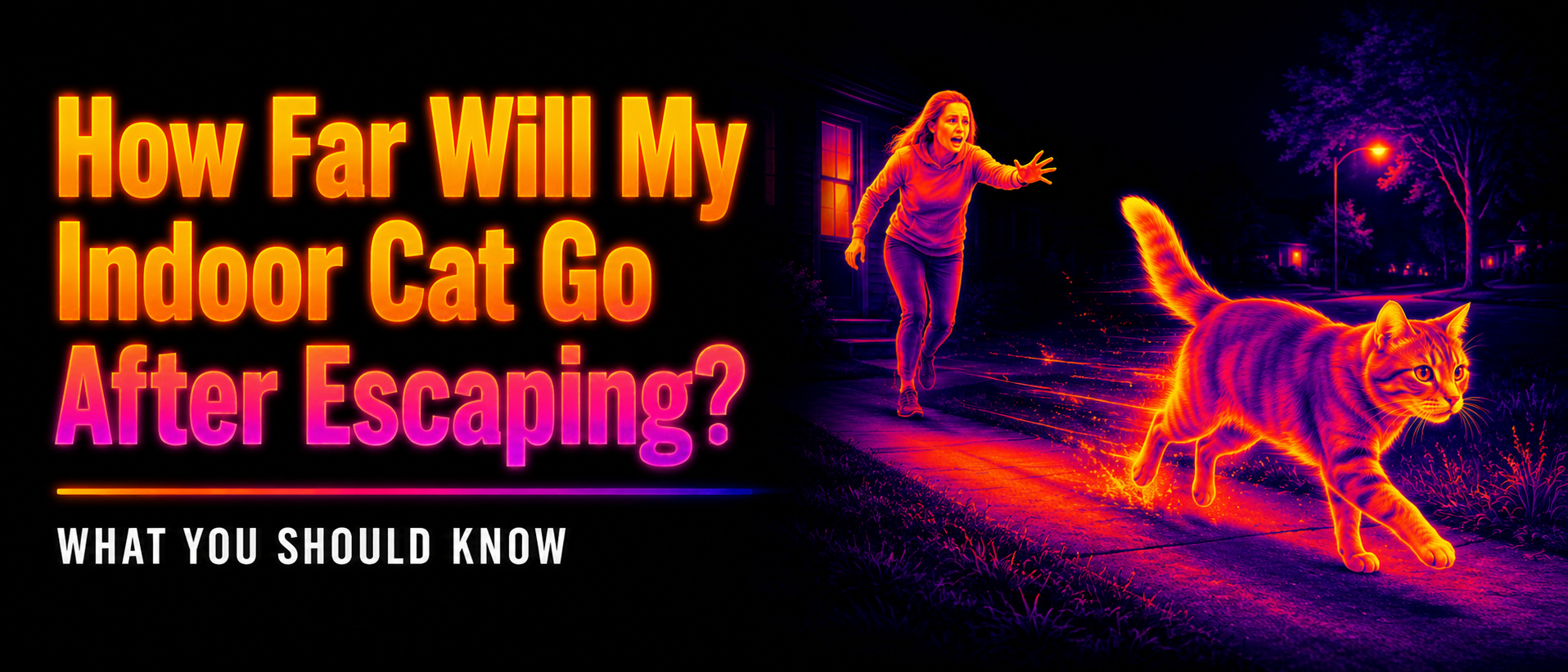
How Far Will an Indoor Cat Go After Escaping?

Most escaped indoor cats do not travel far at first. Many hide within the immediate property, nearby yards, or a few houses from the escape point.

But the difficulty is not always distance. A frightened indoor cat may stay silent, hide deeply, move only at night, and refuse to come when called — even while it hears its owner nearby. Confirming where a nearby cat actually is, and creating a safe opportunity for it to be recovered, is a different problem than simply knowing it hasn't gone far.

Need Help Locating an Escaped Indoor Cat?

KC Pet Search & Rescue uses behavior-based search planning, thermal ground search, camera strategy, monitored humane trapping, and owner-assisted recovery methods to turn "probably close" into a confirmed, safe recovery.

Why "Close" Does Not Mean "Easy"

Knowing that a cat is probably nearby is not the same as knowing where it is, or being able to get it back safely. The real problem is rarely distance — it's confirming location, understanding movement, and protecting the recovery area long enough to create a safe opportunity.

A cat can be only one or two properties away and remain completely unseen for days at a time.

A frightened cat may hear its owner calling and still refuse to move from cover.

Dense landscaping, decks, sheds, crawlspaces, garages, vehicles, and brush all create genuinely concealed hiding areas.

Quiet nighttime movement may happen every night without the owner ever witnessing it.

"Close to home" does not always mean "easy to recover."

Get Help Finding My Cat

Typical Distance and Movement Patterns

Most indoor cats do not go far at first. An escaped indoor cat is usually scared, overwhelmed, and searching for the nearest tight, dark, quiet place to hide rather than exploring with any confidence. That first hiding spot is often within sight of the escape point.

  • Immediate hiding at or near the escape point — a door, window, deck, garage, or fence line
  • Short movement into a neighboring yard, especially where there's cover like a shed or dense shrubs
  • Nighttime exploration once the neighborhood quiets down
  • Return trips to food, water, or scent left near the original hiding area
  • Being pushed farther by dogs, people, weather, noise, or being chased
  • Settling into a repeated route or routine over several days if left undisturbed

These are typical patterns, not guarantees — every case is different, and no reliable data supports a single universal distance for how far an indoor cat will travel.

Behavior varies by

Indoor-only versus indoor/outdoor history, temperament, age, health, terrain, neighborhood density, weather, how much disturbance the area has had, and how long the cat has been missing.

What Usually Prevents Owners From Finding a Nearby Cat

Searching too loudly, with constant calling and noise
Large groups walking through the area at once
Chasing after a sighting instead of staying calm
Assuming silence means the cat has left the area
Placing food out with no camera to see what's using it
Moving food stations repeatedly without a plan
Setting a trap with no monitoring plan in place
Searching too far away, too early, before nearby areas are ruled out
Never checking garages, sheds, crawlspaces, and neighboring structures
Reacting to every unconfirmed sighting instead of gathering evidence

KC Pet Search & Rescue helps replace guesswork with evidence.

Learn About Cat Recovery Services

Where To Search First

Start close, quiet, and controlled. Indoor cats do not always choose obvious hiding spots — but they are almost always tight, dark, and close to the escape point.

🪵

Under Decks & Porches

🏚️

Sheds & Garages

🕳️

Crawlspaces

🌿

Dense Landscaping

🚗

Under & Around Vehicles

🪓

Wood Piles

🚧

Fence Lines

💧

Drainage Paths

🏘️

Neighboring Yards

🔇

Quiet Structures

Search with a flashlight and look for eye shine rather than repeatedly calling or disturbing every hiding place. A scared cat is more likely to freeze deeper into cover than to come out for a loud or aggressive search.

Some hiding areas cannot be meaningfully checked from a sidewalk or flashlight search. KC Pet Search & Rescue may use thermal ground equipment to scan yards, brush lines, structures, and concealed areas when conditions support it.

Learn About Thermal Cat Search

Random DIY Searching vs. a Structured Recovery Plan

Random DIY Searching

  • Walking farther and farther without any real evidence to follow
  • Calling repeatedly, hoping the cat responds
  • Asking large groups to walk through yards and hiding areas
  • Moving food stations constantly without a plan
  • Using a trap with no monitoring, camera, or placement strategy
  • Assuming the cat is gone because nothing has been seen
  • Reacting to every unconfirmed report or rumor

Structured Recovery Plan

  • Protecting the escape area from unnecessary disturbance
  • Identifying the likely hiding zones based on terrain and behavior
  • Checking neighboring structures with permission
  • Using cameras to confirm presence before acting
  • Monitoring the times and direction a cat is actually moving
  • Using thermal equipment where conditions support it
  • Selecting trap placement and bait strategy from real evidence
  • Reducing pressure while tracking confirmed sightings over time

KC Pet Search & Rescue helps owners move from panic searching to a controlled recovery strategy.

Build My Cat Recovery Plan

How KC Pet Search & Rescue Helps

KC Pet Search & Rescue builds a recovery plan around confirmed evidence instead of guesswork, adjusting the approach as new information comes in.

1

Case & Escape-Point Review

Reviewing where the cat escaped, when it happened, nearby structures, terrain, previous outdoor experience, temperament, and activity around the home.

2

Thermal Ground Search

Using thermal equipment to inspect practical hiding areas and possible travel corridors when environmental conditions allow.

3

Camera Placement & Evidence

Positioning cameras to confirm whether the cat is returning, what time it moves, where it approaches from, and whether wildlife is interfering.

4

Monitored Humane Trapping

Developing a controlled trapping strategy using appropriate placement, bait, weather protection, cameras, and consistent monitoring.

5

Owner-Assisted Recovery

Explaining what the owner should do, what to avoid, and how to protect the recovery zone between visits.

6

Ongoing Adjustment

Adjusting the plan based on sightings, camera evidence, food activity, weather, and movement patterns as the case develops.

When To Stop Relying on DIY Efforts

It's usually worth contacting KC Pet Search & Rescue when:

The cat has been missing overnight
There are no confirmed sightings
The cat has been seen but will not approach
Food disappears but the animal eating it is unknown
Wildlife is visiting the feeding area
The cat only appears on camera, never in person
The owner cannot safely inspect a hiding area
Multiple traps or cameras may be needed
The cat has moved from the original area
The owner is unsure where to place a trap
The recovery zone is becoming increasingly disturbed

None of this means an owner has done anything wrong. Seeking professional guidance early can prevent avoidable mistakes and reduce wasted time.

How Far an Indoor Cat May Move Over Time

First 24 Hours

  • Search close, quietly and calmly
  • Reduce noise around the escape point
  • Check nearby structures with permission
  • Preserve the escape area undisturbed
  • Consider a professional consultation immediately

24–72 Hours

  • Set up cameras near food, scent, and travel routes
  • Start identifying movement patterns
  • Stop expanding the search without evidence
  • Begin a controlled trapping plan if appropriate

3–7 Days

  • Review sightings and camera activity
  • Evaluate food response patterns
  • Adjust camera and trap placement
  • Seek professional assistance if not already involved

After One Week

  • Do not assume the cat is gone
  • Organize all evidence gathered so far
  • Expand the search strategically, not randomly
  • Use professional recovery planning over guesswork

Reviews and Trust

★★★★★

"Thanks to KC Pet Search and Rescue we were able to find our beloved 1 year old cat. He was gone for days and was able to be recovered."

Wyatt Parmley — Missing Cat Recovery
★★★★★

"My cat Gizmo was missing a total of 4 days... Richard is a really nice guy and he walks you through everything, giving you helpful tips about your cat and giving you reassurance. It only took Gizmo 4-5 hours to walk right into the trap he set up and we were finally able to have him back."

Nevaeh Brown — Gizmo, Missing Cat Recovery
★★★★★

"I called KC Pet Search & Rescue early the next morning. In just a couple of hours, Richard was at my door walking me through the best plan to recapture my buddy... In less than 24 hours after his initial escape, Marko was safely inside."

Abby Chronister — Marko, Indoor-Only Cat Recovery
Read Kansas City Pet Recovery Reviews

Common Questions About How Far Indoor Cats Go

How far will an indoor cat go after escaping?
Most indoor cats do not go far at first. They usually hide close to the escape point — often in a nearby yard, under a deck, porch, shed, or in dense landscaping — rather than traveling any real distance. Fear tends to make an escaped indoor cat freeze and hide rather than roam, which is why KC Pet Search & Rescue always starts a search close to home instead of assuming the cat has moved far away.
How close might my cat be?
Often only one or two properties away. An indoor cat that gets outside is usually overwhelmed by the noise, smells, and open space, so it looks for the nearest tight, dark, quiet place to hide rather than exploring with confidence. That means a cat can be genuinely close while still going completely unseen for days.
Why will my cat not come when called?
Fear can cause a cat to freeze and stay silent even when it hears a familiar voice nearby. This is a normal stress response, not the cat rejecting its owner. Loud, repeated calling can sometimes keep a scared cat pinned in hiding rather than drawing it out, which is part of why KC Pet Search & Rescue recommends a quiet, evidence-based approach instead.
When should I contact professional help?
Reaching out early is rarely a mistake. It's especially worth contacting KC Pet Search & Rescue if the cat has been missing overnight, there are no confirmed sightings, the cat has been seen but won't approach, or you're unsure where to place a camera or trap. Early guidance can prevent common mistakes that push a cat farther from home.
Can thermal imaging find a hidden cat?
Thermal ground search can help in some cases, especially when checking yards, brush lines, structures, and areas that are hard to inspect visually. It works best when conditions support it and is generally used alongside cameras and evidence, rather than as a stand-alone solution for every case.
Do cameras help recover escaped cats?
Yes. A trail or cellular camera near the escape point or a suspected hiding area can confirm whether a cat is still present, reveal what time it's moving, and show whether it's returning to food or a specific spot. That evidence is often what turns a guessing game into a workable recovery plan.
When is a humane trap appropriate?
A humane trap may make sense once a cat has been confirmed nearby but won't come out, only appears at night, or is too frightened to approach a person directly. Trap placement, bait, and monitoring matter as much as the trap itself, which is why KC Pet Search & Rescue builds trapping around camera evidence rather than guessing at a location.
Can I recover a cat that has been missing for more than a week?
Yes. Indoor cats can remain hidden and silent for a week or longer without meaning recovery is unlikely. At that point, organizing existing evidence — sightings, camera activity, and food response — and adjusting the search strategically is usually more effective than starting over or assuming the cat is gone.
Should I leave food outside?
Food can help, but only with a way to monitor it. Unmonitored food is just as likely to attract raccoons, opossums, or neighborhood animals as it is the missing cat, which can make it harder to tell whether your cat is actually still in the area. Pairing a feeding station with a camera gives far more useful information.
What if I see my cat but it runs away?
Do not chase. Chasing almost always pushes a frightened cat deeper into hiding or farther from the escape point. Note the exact time, location, and direction, then let the area settle before trying again. That sighting information is valuable for building a focused recovery plan even if the cat doesn't approach right away.

Your Indoor Cat May Be Close — But Recovery Still Requires a Plan

Hiding silently is normal for a frightened indoor cat, and not responding to your voice does not mean the cat is gone. Random searching can waste critical time, while cameras, thermal search, trapping strategy, and a controlled recovery approach can meaningfully improve the process.

KC Pet Search & Rescue provides a free recovery consultation for submitted cases across the Kansas City area, including Johnson County, Jackson County, and Wyandotte County.

Call or text 913-915-2800 — serving the Kansas City area.

No service can guarantee recovery. KC Pet Search & Rescue provides professional methods designed to improve the odds of a safe outcome.

Back to top