
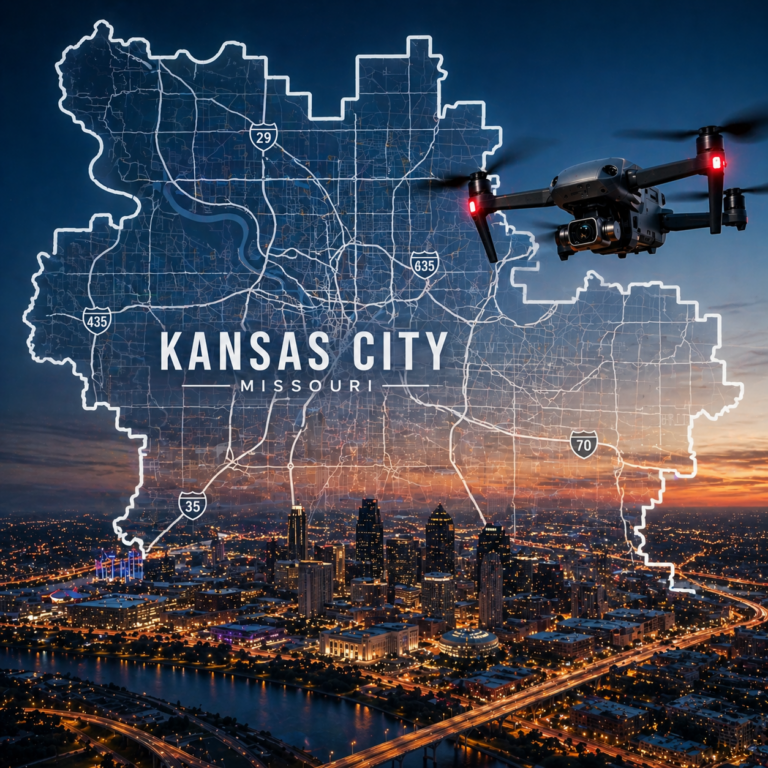
If your dog is missing, recently seen, hiding near fields, woods, neighborhoods, or open ground, KC Pet Search & Rescue provides structured thermal drone search support across the Kansas City area. This is not random drone flying — this is pet recovery strategy with thermal technology.
The earlier you call, the better the information usually is. If your pet was just spotted, your tracker stopped updating, or you have a specific search area, do not waste daylight and do not send people chasing. Start with a controlled search plan.
Thermal drone searches are flown with safety, airspace, weather, and visibility conditions in mind.
We are not just a drone company. We focus on missing pet behavior, sightings, terrain, and recovery decisions.
Serving lost dog and missing pet cases across Johnson County, Jackson County, Wyandotte County, Clay County, and Platte County.
Most people search for a thermal drone pilot when the situation already feels urgent. A dog may have disappeared into a field, woods, creek line, industrial area, golf course, subdivision edge, or rural property. The goal is not to get drone footage. The goal is to use thermal technology with a recovery plan before the trail gets colder.
A fresh sighting gives a thermal drone search a much stronger starting point. If the area is defined, we can work from the last known location instead of guessing.
AirTags, GPS collars, and tracking devices can help narrow the search area, but they do not always tell the full story. A thermal scan may help check the surrounding terrain.
Fields, parks, brush lines, retention areas, wooded edges, and open ground can be difficult to cover quickly. A drone can scan areas that would take much longer on foot.
Chasing, shouting, and sending too many people into the area can push a scared dog farther away. A controlled search helps protect the recovery opportunity.
Important: a thermal drone is a tool, not a magic answer. The best results come from combining thermal flight, recent sightings, animal behavior, ground confirmation, and smart recovery decisions.
When a pet is missing, the drone is only one part of the job. A thermal drone pilot may be able to fly, but lost pet recovery requires knowing how scared animals move, where they hide, what pushes them away, and how to turn a sighting into a recovery plan. That is where KC Pet Search & Rescue is different.
The goal is not to simply launch a drone. The goal is to make smart decisions while your pet may still be close enough to locate, contain, or guide back safely.
Thermal drone searches work best when the search area is defined and the conditions allow heat signatures to stand out. The better the information, the better the scan. A recent sighting, tracker location, or known travel path can make a major difference.
A dog seen within a specific area gives the search a clear starting point and keeps the flight focused.
Cooler periods often create better contrast between an animal and the surrounding ground or structures.
Fields, parks, golf courses, construction areas, drainage zones, and rural edges can be good thermal search environments.
AirTags, GPS collars, and last phone pings can help narrow where the drone should begin scanning.
A drone can help check areas that are difficult, slow, unsafe, or inefficient to cover on foot.
The search works better when the area has not been overwhelmed by people chasing, yelling, or spreading pressure.
Best-case scenario: your dog was recently seen, the area is defined, the conditions are cooler, and we can scan before the dog moves farther or gets pushed by activity.
A successful thermal drone search starts before the drone ever leaves the ground. We look at the escape point, last known location, recent sightings, terrain, weather, airspace, and pet behavior before deciding how to search. The mission is simple: scan smarter, avoid unnecessary pressure, and help create the next recovery move.
We review where your pet escaped, where they were last seen, how long they have been missing, and whether there are tracker updates, sightings, camera footage, or possible travel paths.
We look at fields, wooded edges, creek lines, neighborhoods, parks, commercial areas, roads, fences, water, and safe flight limitations before building the search plan.
When conditions allow, we use thermal drone technology to scan likely areas in a structured pattern instead of randomly flying over a large area with no plan.
Thermal signatures must be interpreted carefully. Wildlife, people, objects, and pets can all create heat signatures, so the goal is to identify possible targets and confirm them safely when possible.
After the search, we help determine the next best move. That may include owner instructions, camera placement, feeding strategy, trap planning, flyer direction, or a return search if new sightings come in.
The drone search is only valuable if it leads to better decisions. Our goal is to use the information from the air to support the safest and smartest path toward getting your pet home.
Lost dogs do not always run in a straight line, and many do not come when called once they are scared. They may move along fence lines, creek beds, drainage areas, wooded edges, fields, golf courses, business parks, or the back side of neighborhoods. A thermal drone search can help check these areas faster when the conditions are right. The key is using the drone with a recovery plan, not as a random search tool.
Even friendly dogs may stop responding once they are in survival mode. Calling, chasing, and crowding the area can make them move farther away.
Open fields, wooded edges, parks, drainage routes, and rural property lines can often be scanned more efficiently from the air than on foot.
A recent sighting gives us a starting point. Without a defined area, the search can become too broad and less effective.
Finding a possible heat signature is only part of the mission. The next decision may be quiet containment, owner direction, cameras, feeding, or trap coordination.
If your dog was just seen or your tracker stopped updating, act fast. A focused thermal search may help narrow the area before your dog moves farther or gets pushed by activity.
Call For Lost Dog Search HelpSometimes, but cat recovery is very different from dog recovery. An escaped indoor cat usually does not travel like a loose dog. Most indoor cats hide close, stay silent, avoid movement, and wedge into tight spaces where they may not be visible from the air. Thermal drones can help in certain cat cases, but they are usually only one piece of the recovery plan.
Many escaped indoor cats stay near the escape point, often under decks, porches, sheds, bushes, crawlspaces, garages, or nearby cover.
A scared cat may not respond to their name, treats, shaking food, or familiar voices. Silence does not mean they are gone.
Cats can hide under cover, close to structures, inside clutter, or beneath objects that block a clear heat signature from above.
Cameras, feeding stations, scent control, quiet routines, and humane trapping are often the strongest tools for bringing an indoor cat home.
For missing cats, the question is not always “Do I need a drone?” The better question is: what recovery method gives this specific cat the best chance to come home based on behavior, hiding cover, terrain, and timing?
KC Pet Search & Rescue provides thermal drone search support for lost pets across the Kansas City metro. Every area is different. A search in a Johnson County subdivision is not the same as a search near rural land, wooded creek beds, commercial properties, golf courses, or open Missouri fields. The search plan has to match the terrain.
Olathe, Overland Park, Lenexa, Shawnee, Leawood, Prairie Village, Gardner, Spring Hill, De Soto, Mission, and nearby areas.
Kansas City, Lee’s Summit, Independence, Blue Springs, Raytown, Grandview, Grain Valley, and surrounding communities.
Kansas City, Kansas, Bonner Springs, Edwardsville, Piper, Turner, and nearby neighborhoods with fields, parks, and wooded edges.
Liberty, Gladstone, North Kansas City, Smithville, Kearney, and Northland areas where pets may move through fields and wooded corridors.
Parkville, Platte City, Riverside, Weatherby Lake, Weston, and nearby rural or suburban search zones.
We also assist surrounding metro areas when travel, weather, airspace, timing, and search conditions allow.
Local terrain matters. Lost pets may move along fence lines, drainage paths, creek beds, wooded edges, industrial areas, parks, golf courses, neighborhoods, and rural property lines. A smart thermal search starts with understanding where that pet is most likely to be.
If your pet was recently seen, your tracker stopped updating, or you have a specific area that needs to be searched, this is the time to act. Waiting, chasing, or sending too many people into the area can make recovery harder.
KC Pet Search & Rescue provides thermal drone search support, lost pet recovery strategy, and practical next steps for missing dog and pet cases across the Kansas City metro.
Thermal drones can be extremely helpful in the right situation, but they work best when owners understand what they can do, what they cannot do, and when a search needs to happen fast.
Yes, a thermal drone can help find a lost dog when conditions are right. The strongest searches usually involve a recent sighting, a defined search area, cooler conditions, and a safe place to fly.
Night, early morning, and cooler weather often provide better thermal contrast. Hot pavement, roofs, fences, rocks, and sun-heated ground can make daytime searches harder to interpret.
No. A pilot may know how to fly but may not understand scared dog behavior, lost pet movement, recovery pressure, sightings, feeding strategy, or what to do after a possible heat signature is found.
They can help around wooded edges, trails, creek lines, and openings, but heavy tree canopy can block visibility from above. In those cases, ground strategy, cameras, and recovery planning may matter more.
Sometimes, but cats are different. Indoor cats often hide close, low, silent, and under cover. Thermal may help in certain cases, but cameras, feeding stations, scent control, and humane trapping are often more important.
Call as soon as you have a recent sighting, tracker clue, escape point, or defined search area. Waiting too long can allow the pet to move farther and can make the search area much harder to narrow.
Avoid chasing, yelling, sending crowds into the area, or repeatedly driving through the search zone. Too much pressure can push a scared pet farther away before a controlled search can happen.
Need a different type of lost pet help? Use these Kansas City pet recovery resources to find the right next step for your situation.