
Free Lost Pet Command CenterCreate a missing-pet case and use community recovery tools
Emergency Cat Help
KC Pet Search & Rescue
Call Now 913-915-2800
Emergency Dog Help
KC Pet Search & Rescue
Call Now 913-915-2800
Free Lost Pet Command CenterCreate a missing-pet case and use community recovery tools
Emergency Cat Help
Emergency Dog Help
Emergency Dog Search — Kansas City

What To Do in the First Hour Your Dog Goes Missing

Fast, calm action in Kansas City, Johnson County, and the surrounding metro

The first hour matters, but panic is not a plan. Most dogs are still close by early on — what happens in the next sixty minutes shapes how easy or hard the rest of the search becomes.

KC Pet Search & Rescue helps Kansas City area owners turn that first hour into a real recovery plan, with same-day help when it's needed.

Every submitted recovery form receives a free consultation
Panicked owner rushing out an open door with an empty leash moments after their dog got loose

Immediate Action Summary

  • Do not chase. Chasing almost always makes a scared dog run farther and faster.
  • Stop repeated loud calling if your dog is in flight mode. A dog in fear mode reads pressure as a threat, not an invitation.
  • Secure the escape point and last-seen area. Keep gates, doors, and yards as they were so the starting point stays clear.
  • Gather location details. Exact time, exact spot, and direction of travel if you saw it.
  • Alert nearby people — neighbors, delivery drivers, dog walkers — calmly and quickly.
  • Start with strategy, not panic. A short pause to think clearly is worth more than an hour of random driving around.

Step 1: Protect the Last-Known Area and Build a Search Plan

Before anything else, the priority is to lock down what you actually know and stop the situation from getting harder to read. That means:

  • Establishing the dog's last confirmed location as precisely as possible
  • Preventing unnecessary chase pressure that pushes the dog farther from that spot
  • Documenting the direction of travel, if there was one
  • Gathering sightings and treating each one as evidence, not just reassurance
  • Identifying nearby roads, woods, fields, water, neighborhoods, and other hazards
  • Deciding which recovery method actually fits the situation in front of you

A thermal drone can be highly effective when conditions and circumstances support it — but it isn't automatically the right tool for every case.


Honest limitations: airspace restrictions, weather, heavy tree canopy, buildings, terrain, and poor or conflicting sighting information can all limit what a drone can actually confirm. KC Pet Search & Rescue evaluates the specific situation first, then chooses the response that fits it — drone, ground search, or both.
Lost dog moving through a dark outdoor area at night, illustrating why direction of travel and terrain matter when building a search plan
Illustration of a lost dog looking into the distance, representing how quickly behavior changes once a dog is loose

What Usually Happens in the First Hour

A dog that's normally calm and friendly at home doesn't always behave that way once it's loose. Fear changes behavior fast, and that changes what actually works.

  • Many dogs keep moving if they feel pressured, even in a direction that seems to make no sense
  • A friendly family dog can act like a stranger once it's scared and outside its normal routine
  • Panic narrows a dog's focus to escape, not to recognizing familiar voices
  • Running after a dog almost always increases distance instead of closing it

This is exactly why early strategy matters more than early speed. The first hour is the most predictable window you'll have — what you do with it counts.

Common First-Hour Mistakes That Can Push a Lost Dog Farther Away

None of this is about blame — these are natural instincts. They just tend to work against you in the first hour.

  • Chasing the moment the dog is spotted
  • Repeated shouting that adds pressure instead of comfort
  • Honking or loud noises meant to get attention, which often has the opposite effect
  • Sending too many people into the area at once, which can push a scared dog further
  • Posting inaccurate or unconfirmed sightings that send searchers the wrong direction
  • Moving food or scent items repeatedly instead of leaving a consistent spot to monitor
  • Driving randomly without documenting routes, so the same ground gets covered while other areas are missed
  • Assuming the dog will respond normally to its name or to people it knows well
  • Waiting too long to seek professional help once the situation is clearly bigger than a quick walk-around
Owner chasing after a frightened dog that is running away, illustrating why chasing usually backfires

Your First-Hour Action Plan

0–15 Min

The First 15 Minutes

  • Stop chasing — even if the dog is still in sight
  • Secure any other pets so the situation doesn't multiply
  • Return to the exact escape point (gate, fence gap, door, leash slip)
  • Check immediate hiding areas close to home before going farther
  • Note the exact time and direction the dog was last seen heading
  • Collect a recent, clear photo to have ready
  • Keep one calm person stationed at the last-known location
  • Prevent a crowd from forming around that spot
15–30 Min

Minutes 15–30

  • Alert nearby neighbors calmly, without alarming the whole street
  • Tell anyone helping not to chase or call out aggressively if they spot the dog
  • Check any nearby doorbell or security cameras for a possible sighting
  • Document every sighting with exact time and location, including secondhand ones
  • Start identifying likely travel corridors — fence lines, alleys, drainage paths, open lots
  • Contact KC Pet Search & Rescue to start a free consultation
  • Complete the emergency recovery form so details are on record
30–60 Min

Before the First Hour Ends

  • Organize sightings on a map so patterns are easier to see
  • Work out whether the dog is likely hiding, traveling, circling, or fleeing
  • Begin a controlled search plan instead of scattering effort
  • Evaluate whether a thermal drone actually fits this situation
  • Prepare social media posts with accurate details, ready to share in a coordinated way
  • Notify nearby shelters and animal control when appropriate
  • Avoid sending large groups off in different directions without a plan
Past the first hour with no dog in hand? Every submitted recovery form receives a free consultation.

What To Do If You See Your Dog

Spotting your dog is a huge moment — but how you respond in the next few seconds matters just as much as the sighting itself.

Do not run toward the dog, even if you're excited or relieved
Do not let a group surround or close in from multiple directions
Avoid loud, emotional calling — it can read as pressure, not comfort
Turn sideways or lower your posture to seem less threatening
Use calm, slow body language and a quiet voice
Let the dog choose to approach you, rather than closing the distance yourself
Use familiar food or scent only if it won't cause the dog to bolt
Report the exact sighting immediately — time, location, and direction
Follow the recovery plan already in place rather than improvising on the spot
Even a normally friendly, well-trained dog can act like a stranger while frightened or in flight mode. That's not a training failure — it's a fear response, and it changes what actually works.

When to Call KC Pet Search & Rescue

Some first-hour situations resolve with a calm owner and a little patience. Others need professional help right away. Call sooner rather than later if:

You've had a sighting, but the dog keeps moving before anyone can reach it
Your dog appears to be in full flight mode, running from anyone who approaches
The area includes roads, woods, creeks, fields, or industrial property
It's nighttime or visibility is limited
You don't have consistent, reliable location data on where the dog actually is
You've had multiple sightings that don't line up with each other
Your dog is acting completely out of character for how it normally behaves

How KC Pet Search & Rescue Helps

KC Pet Search & Rescue gives Kansas City owners same-day help built around real search experience, not guesswork — and not a single tool applied to every case.

The goal is not simply to fly a drone. The goal is to determine the safest and most effective recovery strategy for that specific dog, in that specific situation.
KC Pet Search and Rescue thermal drone and ground search equipment, including a humane trap, used near the Kansas City skyline

Lost-Dog Behavior Analysis

Reading what a dog's specific behavior pattern means for how it's likely to respond and move.

Last-Known-Location Evaluation

Turning the escape point and surroundings into a realistic starting picture.

Organized Sighting Tracking

Logging sightings by time and location so real patterns emerge instead of guesswork.

Thermal Aerial Search When Appropriate

Aerial thermal search can quickly cover large or hard-to-access areas when conditions support it.

Visual Zoom-Camera Confirmation

Confirming a heat signature is actually the right dog before committing to a response.

Ground Coordination

Focused, quiet ground search built around where a scared dog is likely to go and hide.

Controlled No-Chase Guidance

Coaching owners and helpers on how to approach a sighting without scattering the dog.

Terrain and Hazard Assessment

Accounting for roads, water, tree cover, and other hazards that shape the plan.

Follow-Up Deployment Planning

Adjusting the plan as new sightings and evidence come in, rather than a single attempt.

Coordination With Owners and Helpers

Keeping neighbors, volunteers, and family focused instead of working against each other.

Ready to start? Begin with a free recovery consultation.

Information KC Pet Search & Rescue Needs Before a Deployment

Having these details ready speeds everything up. You don't need all of it before reaching out — but the more that's ready, the faster a plan comes together.

Dog's name
Recent, clear photo
Breed, size, and color
Collar or harness details
Exact last-seen address
Exact time last seen
Direction of travel
Confirmed sightings
Temperament
Whether the dog is fearful or friendly
Nearby hazards
Whether anyone has chased the dog
Owner contact information
Start With the Emergency Recovery Form

Real Dog Recovery, Not Just Theory

Two real Kansas City area recoveries that started the same way every case does — a dog loose, and an owner deciding what to do next.
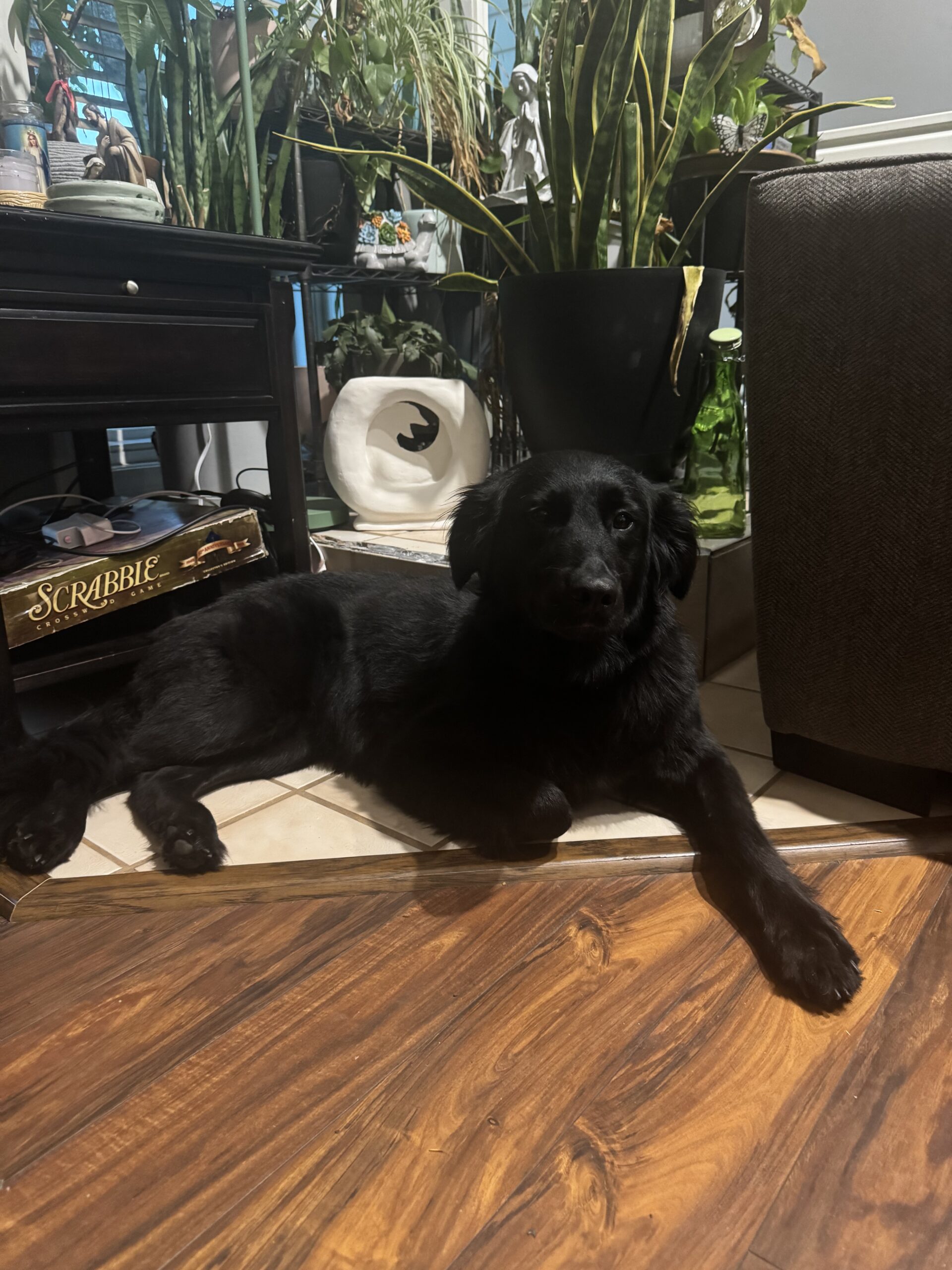
Izzy safely home after her lost dog recovery in Osage County, Kansas

Izzy — Osage County, Kansas

Izzy got loose and stayed on the move, exactly the kind of case where early strategy and search coordination make the difference.

See Izzy's Full Recovery Story →
Callie safely home after her lost dog recovery in Olathe, Kansas

Callie — Olathe, Kansas

Callie, a skittish 7-year-old rescue, stayed missing for two days before a focused search brought her home safely.

See Callie's Full Recovery Story →

Owners Tell the Full Story

Real Kansas City area owners on what happened when their dog got loose.

★★★★★

"The best search and rescue there is! He helped us find our pup before the fireworks got too loud on the 4th of July."

GK
Missing Dog · 4th of July Emergency
Read the full review →
★★★★★

"BIG MASSIVE SHOUT OUT to KC Pet Search & Rescue!!!! Callie got out and I can't tell you how many hours we spent looking for her... There is absolutely no way we would have been able to find her without KC Pet Search & Rescue!!!"

Lindsey Nicholson
Callie · Skittish Rescue Dog · Recovered
Read the full review →
★★★★★

"Helped us find our puppy!"

El Jonathan
Puppy Recovery
Read the full review →

Also Post to the Kansas City Lost Pet Facebook Directory

Posting to local Facebook groups is genuinely useful — but it works best as support for an organized recovery strategy, not a replacement for one.

Emergency Dog Search Across the Kansas City Metro

KC Pet Search & Rescue responds throughout Kansas City and the surrounding metro — Johnson and Wyandotte counties on the Kansas side, and Jackson, Clay, and Cass counties on the Missouri side — including Olathe, Overland Park, Lenexa, Shawnee, Leawood, Gardner, and Spring Hill, plus Kansas City MO, Lee's Summit, Independence, Blue Springs, and Liberty.

Kansas City, KSKansas City, MOOlatheOverland Park LenexaShawneeLeawoodGardnerSpring Hill Lee's SummitIndependenceBlue SpringsLiberty Johnson CountyWyandotte CountyJackson CountyCass CountyClay County

Frequently Asked Questions

What should I do first when my dog goes missing?
Stop chasing, secure the escape point, and check the immediate area quietly before expanding outward. Note the exact time and direction, and keep one calm person at the last-known spot.
Should I chase my dog if I can see it?
No. Chasing usually increases distance instead of closing it. A calmer approach — or professional help — works better once a dog is in flight mode.
Why is my dog running away from people it knows?
Fear can override training and familiarity. A dog in flight mode is reacting to stress, not disobeying, which is why some dogs won't come back when called even by their own owner.
How far can a dog travel in the first hour?
It varies widely by dog and situation. Early, calm action generally keeps the search area smaller.
When should I call KC Pet Search & Rescue?
As soon as the situation feels bigger than a quick walk-around — especially with unreliable sightings, nighttime conditions, or a dog that's clearly in flight mode. A free consultation costs nothing to start.
Can a thermal drone always find a missing dog?
No. A thermal drone can be highly effective when conditions support it, but airspace restrictions, weather, heavy tree canopy, buildings, terrain, and poor sighting information can all limit what it can confirm. It's one tool among several, not a guaranteed solution.
What information should I provide before a search?
A recent photo, breed, size, color, exact last-seen address and time, direction of travel, confirmed sightings, and temperament all help speed up a deployment.
Does KC Pet Search & Rescue provide same-day help?
Yes. Same-day help is available for freshly missing dogs across the Kansas City metro, and every submitted recovery form receives a free consultation.
Should I post my dog in Facebook groups immediately?
Posting can help spread the word, but it works best alongside an organized recovery plan, not as a replacement for one. Keep posts accurate and avoid flooding multiple groups with conflicting details.
What parts of the Kansas City area do you serve?
Kansas City and the surrounding metro, including Johnson, Wyandotte, Jackson, Clay, and Cass counties — Olathe, Overland Park, Lenexa, Shawnee, Leawood, Gardner, Spring Hill, Lee's Summit, Independence, Blue Springs, and Liberty.

Every Minute Counts. Get a Real Plan, Not Just Advice.

The first hour is about control, not panic. KC Pet Search & Rescue turns that first hour into a coordinated search — with same-day help when it matters most.

Every submitted form receives a free consultation · Serving Kansas City, Johnson County, Jackson County, and the surrounding metro

Back to top