Free Lost Pet Command CenterCreate a missing-pet case and use community recovery tools
Emergency Cat Help
KC Pet Search & Rescue
Call Now 913-915-2800
Emergency Dog Help
KC Pet Search & Rescue
Call Now 913-915-2800
Free Lost Pet Command CenterCreate a missing-pet case and use community recovery tools
Emergency Cat Help
Emergency Dog Help
KC Pet Search and Rescue pilot launching a thermal drone for a nighttime lost dog search
Kansas City Nighttime Lost Dog Search Guide

How To Find a Lost Dog at Night

Nighttime can create useful recovery opportunities, but success depends on calm movement, accurate sightings, safe search methods, local terrain, and knowing when thermal technology can help.

KC Pet Search & Rescue helps Kansas City-area families organize nighttime sightings, evaluate lost-dog behavior, identify priority search areas, and deploy thermal technology when conditions support it.
Multiple-Pilot Capability FAA Part 107 Operations Certified Thermography DJI Matrice 4T & 4TD High-Zoom Visual Confirmation Ground Thermal Support Free Initial Consultation
If your dog is visible but frightened, do not chase. Record the exact location and direction of travel, then call with the sighting.
Every submitted recovery form receives a free consultation

The Short Answer: How Should You Search for a Lost Dog at Night?

The safest way to search for a lost dog at night is to reduce pressure, verify the last known location, organize sightings, quietly check likely travel and hiding areas, use proper lighting and communication, and consider thermal search when the terrain, weather, airspace, and sighting information make it appropriate.

Nighttime May Offer

  • Lower traffic in some areas
  • Less neighborhood activity
  • Cooler temperatures
  • Better thermal contrast in some conditions
  • More useful sightings for dogs that move during quieter hours

But Also Consider

  • Not every dog moves at night
  • Some dogs remain hidden
  • Some dogs move during dawn or early morning instead
  • Weather and terrain affect search quality
  • Search pressure can make sightings less useful
  • Darkness creates real safety risks for owners and volunteers
Dog recovered safely at home after a Kansas City search

Why Some Lost Dogs Move After Dark

A frightened or displaced dog may move during quieter hours because:

  • Fewer people are outside
  • Traffic may be reduced
  • Temperatures may be cooler
  • Background noise may decrease
  • The dog may feel less observed
  • Food or water sources may be easier to approach
  • The dog may revisit a familiar route
  • The dog may move back toward the escape point
This is a pattern seen in some cases, not a rule that applies to every missing dog.

Other dogs may remain completely hidden overnight, rest in brush or structures, travel only briefly, move near dawn, change behavior after being chased, or establish a repeated route between two locations. Read more about why a dog may not come back when called and see the best time of day to search for a lost dog for a fuller comparison across the day.
What To Do in the First 30 Minutes of a Night Search

A short, focused checklist beats a frantic scramble in the dark.

1

Confirm the exact last known location.

2

Record the exact time.

3

Ask for direction of travel.

4

Check nearby cameras.

5

Search immediate cover quietly.

6

Bring a charged phone.

7

Use a flashlight or headlamp.

8

Wear reflective or visible clothing.

9

Carry a slip lead or leash.

10

Bring high-value food.

11

Avoid large search groups.

12

Tell everyone not to chase.

13

Record every sighting with a map pin.

14

Contact KC Pet Search & Rescue when the search area is uncertain or expanding.

Do Not Turn a Nighttime Sighting Into Another Escape

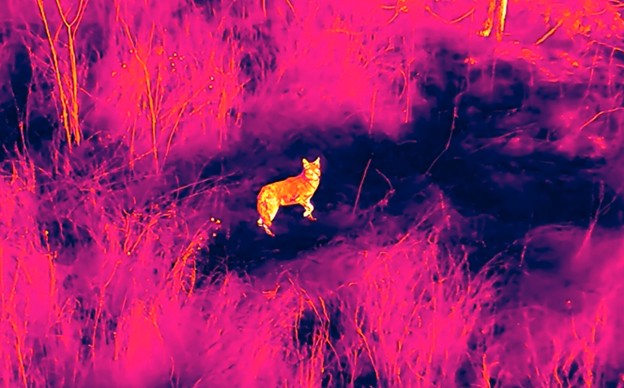
Thermal image of a dog detected during a KC Pet Search & Rescue nighttime search mission

Why Nighttime Pursuit Is Especially Risky

  • The dog may run toward traffic
  • Visibility is reduced for everyone
  • The dog may cross terrain unseen
  • Searchers may lose direction of travel
  • A dog may abandon a repeating route
  • A dog may avoid a feeding or camera location
  • Searchers may enter unsafe or private property
  • Multiple flashlights and voices may increase pressure

If You See the Dog

  • Stop moving toward the dog
  • Do not shine lights directly into its face
  • Turn sideways
  • Lower your posture when safe
  • Avoid direct eye contact
  • Use calm, slow movement
  • Do not surround the dog
  • Record exact location and direction of travel
  • Notify the owner or recovery team immediately

Nighttime Sightings Must Be Timed, Mapped, and Verified

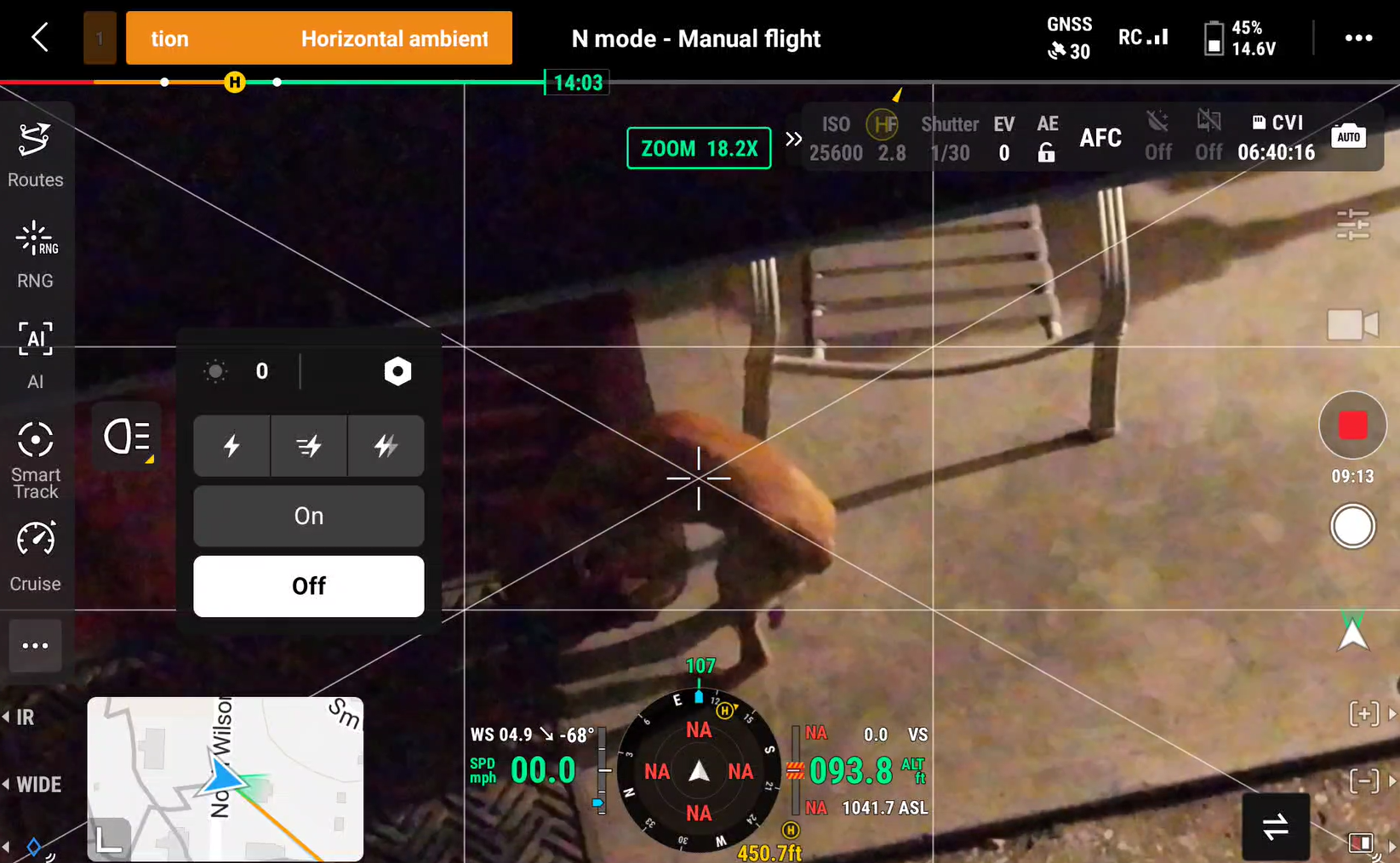
Aerial drone view used to track a nighttime dog sighting during a Kansas City search

A Useful Sighting Includes

  • Exact time
  • Exact address or GPS pin
  • Direction of travel
  • Side of road
  • Speed and behavior
  • Collar or harness
  • Coat color and size
  • Photo or video
  • Reaction to people
  • Whether anyone followed or chased
  • Witness name and contact information

KC Pet Search & Rescue Evaluates

  • Direction of travel
  • Repeated movement patterns
  • Road crossings
  • Resting areas
  • Return locations
  • Potential camera placement
  • Thermal scan zones
  • Areas where ground pressure should be reduced
Have a recent nighttime sighting? Call 913-915-2800 before the location becomes outdated.

Where Lost Dogs May Travel at Night Across Kansas City

Johnson County & Kansas Suburbs

Olathe, Overland Park, Lenexa, Shawnee, Gardner, Leawood, and Spring Hill combine greenways, creek corridors, retention ponds, school grounds, golf courses, construction zones, industrial parks, connected subdivisions, and highway barriers — all of which can shape where a dog travels after dark.

Olathe Overland Park Lenexa Johnson County

Eastern Jackson County & Missouri Suburbs

Lee's Summit, Blue Springs, Independence, Raytown, and Grandview feature lake communities, large parks, mature neighborhoods, creek corridors, wooded edges, rail boundaries, commercial corridors, and rural-suburban transitions.

Lee's Summit Blue Springs Independence Jackson County

Kansas City Urban Environments

Alleys, rail corridors, warehouses, loading areas, apartment communities, vacant lots, park systems, industrial properties, dense road networks, and limited property access all change how a nighttime search has to be run.

Kansas City, MO Kansas City, KS

When Thermal Drone Search Can Help at Night

Nighttime may improve thermal contrast in some environments because surfaces cool after sunset, but search quality still depends on real, variable conditions.
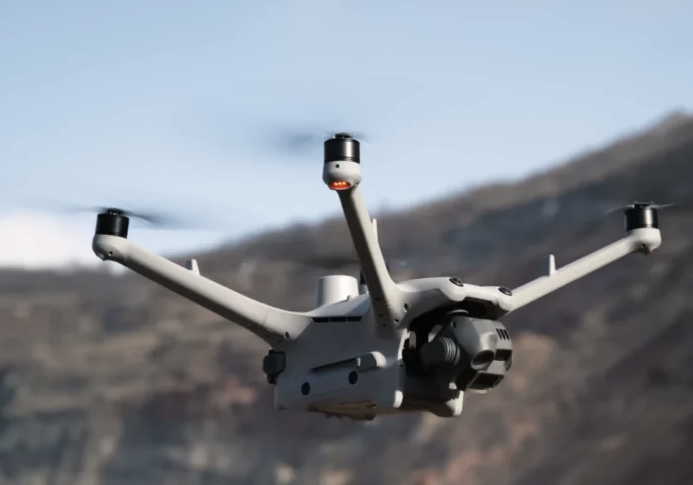
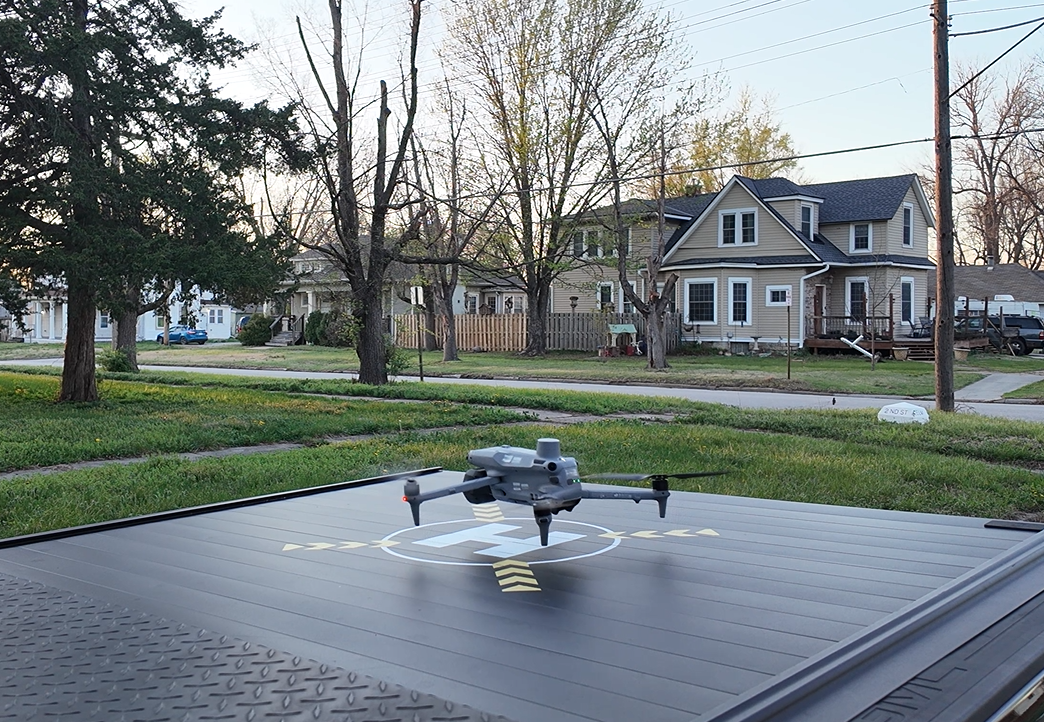
DJI Matrice thermal drone aircraft in flight during a KC Pet Search & Rescue nighttime mission
  • Multiple-pilot capability
  • DJI Matrice 4T and Matrice 4TD aircraft
  • Thermal imaging detection
  • High-zoom visual confirmation
  • Ground thermal support
  • Airspace review before every flight
  • Weather review before every flight
  • Search-area planning based on verified sightings

Search quality still depends on:

Temperature Humidity Wind Rain Vegetation Terrain Surface Heat Dog Location Airspace Property Access Search Timing Recent Sightings

Thermal search tends to be most useful around open fields, tree lines, park edges, creek corridors, large properties, golf courses, construction areas, industrial boundaries, and areas around a recent, verified sighting.

Thermal drone search can be a powerful nighttime tool when the search area, sightings, weather, terrain, and airspace support its use.

What Thermal Cameras Cannot Do

  • They cannot see through walls
  • They cannot see through roofs
  • They cannot see through vehicles
  • Dense vegetation can block visibility
  • Heavy canopy can conceal a dog completely
  • Warm pavement and roofs can reduce contrast
  • A heat signature may be wildlife or another animal, not the missing dog
  • A dog outside the scanned area cannot be detected
  • Flight restrictions may prevent deployment in some areas
  • Thermal detection does not guarantee safe recovery

This is why high-zoom visual confirmation matters — it helps distinguish a genuine dog sighting from wildlife or another false signal before anyone acts on it.

What To Bring During a Nighttime Lost Dog Search

Thermal monocular used by KC Pet Search & Rescue for ground-based nighttime search
Fully charged phone
Portable battery
Flashlight or headlamp
Reflective clothing
Proper footwear
Weather protection
High-value food
Slip lead
Backup leash
Water
Map or location-sharing app
Notebook or sighting log

Night Search Safety

  • Do not search alone in unsafe areas
  • Avoid entering private property without permission
  • Stay away from active rail lines
  • Use caution around roads and water
  • Tell someone where you are searching
  • Do not cross dangerous terrain to pursue a sighting
  • Keep search groups small and coordinated

How KC Pet Search & Rescue Handles a Nighttime Lost Dog Search

KC Pet Search & Rescue does more than launch a drone. A real recovery plan is built step by step.

  1. Free initial consultation
  2. Escape-point review
  3. Dog temperament review
  4. Sighting timeline
  5. Direction-of-travel analysis
  6. Terrain evaluation
  7. Weather and airspace review
  8. Search-area prioritization
  9. Aircraft and ground-tool selection
  10. Thermal scanning
  11. High-zoom confirmation
  12. Ground thermal support
  13. Recovery guidance after detection
  14. Return-sighting response
  15. Follow-up search when appropriate
Jay, KC Pet Search and Rescue pilot, FAA Part 107 certified and a Level 1 certified thermographer

Jay is FAA Part 107 certified and a Level 1 certified thermographer, leading thermal drone deployment with multiple-pilot capability, Matrice 4T and Matrice 4TD aircraft, and ground thermal monoculars — built on real lost-dog recovery experience across the Kansas City metro.

KC Pet Search & Rescue does not perform dog trapping. KC Pet Search & Rescue may provide location information and search support that can assist an experienced dog trapper.

Watch Real Lost Dog Recovery Missions

Two verified Kansas cases show how sighting information, terrain, and thermal search came together in the field.

Jay with Callie and her family after her safe recovery in Olathe, Kansas
Olathe, Kansas

Callie: Located in 28 Minutes

Callie, a small, skittish rescue dog, had been missing for two days when a focused early-morning thermal drone search located her in southwest Olathe just 28 minutes after it began. Calm, controlled coordination brought her safely home that same morning.

Result: Located in 28 minutes after two days missing.
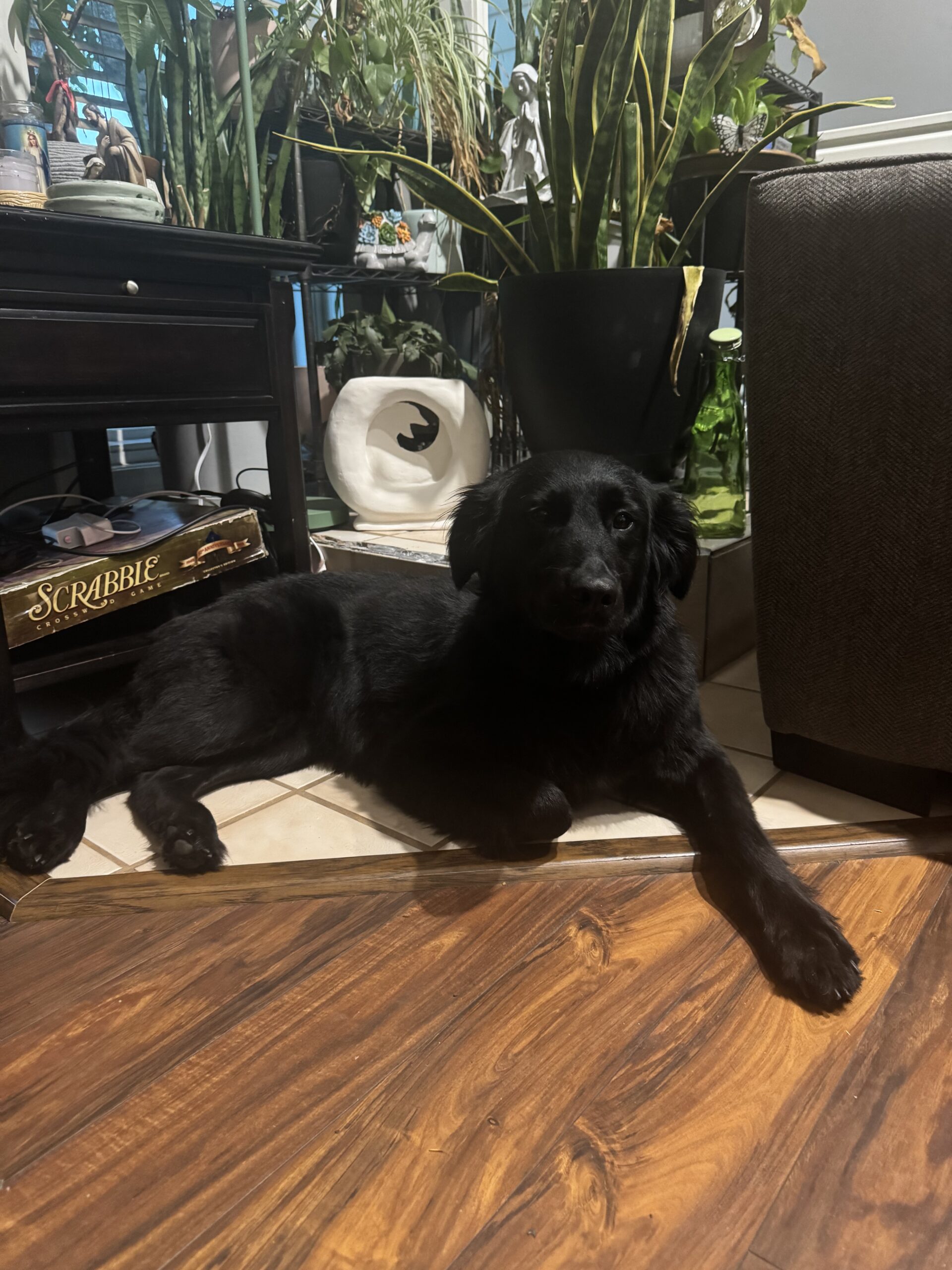
Izzy resting safely at home after her recovery in Osage County, Kansas
Osage County, Kansas

Izzy: 250 Acres Between Rain Showers

Izzy escaped from a rural Osage County home as passing rain showers repeatedly forced the thermal drone to land. Over roughly 84 minutes of flight time, the team covered about 250 acres before guiding her safely back to her owner Grace.

Result: ~250 acres searched despite repeated weather delays.

What Dog Owners Say About KC Pet Search & Rescue

Genuine reviews from KC Pet Search & Rescue's public review page.

KC Pet Search and Rescue five-star Google business review graphic
★★★★★

“My baby boy Peanut was missing 5 days… my husband and I hopped in the truck around 11:30 PM while Jay flew around the neighborhood looking for Peanut and we watched on the large screen in the truck. He explained how it worked… and even while the search was going he would still explain what the drone was picking up.”

Jomarie Bryant
Peanut · Nighttime Thermal Drone Search
★★★★★

“Little Buoy boy was running for over 9 hours, and once Jay got on site with my daughter, he was probably found within an hour. My daughter was riding with him and updating all of the searchers where his last pings were. He was able to spot him and lead the rescuers right to him.”

Robert Pitcairn
Buoy · Found Within About 1 Hour
★★★★★

“I ended up hiring Jay for a scheduled search using his thermal imaging drone, and he dedicated hours to thoroughly surveying the area with me… As it turns out, my dog was safe the entire time in someone else's home — but having Jay's support during those uncertain hours was absolutely priceless.”

Caylen Sunderman
Honest Support, Even Without a Direct Find
★★★★★

“Jay, thank you so much for helping us search for our dog. Your kindness and willingness to help during such a stressful moment meant so much to us… combining high-tech gear like drones with genuine empathy is a rare find.”

Donna Mehl
Short-Notice Response · Drone Search Support
★★★★★

“Helped us find our puppy!”

El Jonathan
Puppy Recovery

Use Facebook To Generate Nighttime Sightings—Not Crowds

Facebook groups are part of the same sighting strategy covered earlier on this page, not a separate afterthought.

Used Well, Facebook Can

  • Alert nearby residents quickly
  • Find recent witnesses
  • Produce doorbell-camera footage
  • Reach night-shift workers
  • Reach delivery drivers and nearby businesses
  • Generate time-stamped sightings

Poor Posting Can Cause

  • People chasing the dog
  • Old sightings resurfacing
  • Duplicate reports
  • Conflicting directions
  • Search crowds
  • Incomplete posts and private-property issues
Find Kansas City Lost Pet Facebook Groups

See groups organized by area in the Kansas City-area lost pet Facebook groups by county, and learn more in social media vs. pet search and rescue.

Night Search Mistakes That Can Make Recovery Harder

Chasing
Driving rapidly behind the dog
Shining bright lights directly at the dog
Sending too many people
Calling loudly and repeatedly
Searching too wide too quickly
Ignoring sighting times
Failing to record direction of travel
Treating every Facebook comment as verified
Entering unsafe property
Searching without proper lighting
Moving food or cameras repeatedly
Hiring a drone operator without a pet-recovery plan
Assuming one drone flight solves every case

Frequently Asked Questions

Is nighttime a good time to look for a lost dog?
It can be, for some dogs and some situations. Lower traffic, less noise, and cooler temperatures may help in certain cases, but nighttime also creates real safety risks and is not automatically the best time for every dog.
Do all lost dogs move more at night?
No. This is a pattern seen in some cases, not a rule. Some dogs remain hidden overnight, some travel only briefly, and some move mostly near dawn instead.
What should I do if I see my dog at night?
Stop moving toward the dog, avoid shining lights directly at it, turn sideways, stay calm, and record the exact location and direction of travel. Call the owner or recovery team immediately instead of approaching.
Should I shine a flashlight at a frightened dog?
No. Shining a light directly into a frightened dog's face can increase pressure and cause it to bolt. Use ambient lighting to see safely without pointing a light straight at the dog.
Should I chase my dog if it runs?
No. Chasing at night is especially risky because visibility is reduced and the dog may run toward traffic or unfamiliar terrain. A calm, controlled approach protects both the dog and the searchers.
Where do lost dogs hide at night?
Common hiding areas include fence lines, wooded edges, creek beds, drainage corridors, sheds, decks, and other quiet cover close to where the dog feels safe.
Can a thermal drone locate a dog at night?
Thermal drone search can be a powerful nighttime tool when the search area, sightings, weather, terrain, and airspace support its use. It is not guaranteed to work in every case.
Can thermal cameras see through trees or buildings?
No. Thermal cameras cannot see through walls, roofs, or vehicles, and dense vegetation or heavy canopy can block visibility. The dog must be within the scanned, visible area.
What should I bring during a night search?
A charged phone, flashlight or headlamp, reflective clothing, proper footwear, high-value food, a slip lead, water, and a way to log sightings with time and location.
Is it safe to search alone at night?
Not always. Avoid searching alone in unsafe areas, stay away from active rail lines, use caution near roads and water, and tell someone where you are searching.
How should I record a nighttime sighting?
Note the exact time, exact location, direction of travel, side of road, and the dog's behavior. Photos, video, and witness contact information all make a sighting more useful.
When should I call KC Pet Search & Rescue?
As soon as the search area is uncertain or expanding, sightings are scattered, or your dog is frightened and evasive. Every submitted recovery form receives a free consultation.
Does KC Pet Search & Rescue trap dogs?
No. KC Pet Search & Rescue does not perform dog trapping, but can provide location information and search support that assists an experienced dog trapper.
What happens after a dog is located?
Finding the dog is a major breakthrough, but recovery still requires a controlled plan — calm observation, a food station, or coordinated final approach — to avoid turning the sighting into another chase.
Does KC Pet Search & Rescue guarantee recovery?
No. Every missing-dog case is different, and outcomes depend on terrain, weather, sightings, and the dog's behavior. KC Pet Search & Rescue provides professional strategy and technology, not a guaranteed result.

Your Dog Is Missing Tonight. Start With a Controlled Recovery Plan.

KC Pet Search & Rescue helps Kansas City families organize sightings, evaluate dog behavior, identify priority search areas, use thermal technology when appropriate, and plan what happens after the dog is located.

Serving Kansas City, Johnson County, Jackson County, and the surrounding metro
Back to top