
The strongest lost-dog recovery plan combines fast action, calm behavior, verified sightings, local terrain knowledge, controlled searching, social-media awareness, and professional search technology when the case requires it.
KC Pet Search & Rescue helps Kansas City-area families organize sightings, understand lost-dog behavior, prioritize the right search areas, use thermal technology where appropriate, and build a safer recovery plan.
This is the same order of operations KC Pet Search & Rescue uses on real cases across the Kansas City metro — from the first phone call to a safe reunion.
Every strong search starts with an accurate picture of how the dog got out. Vague starting information creates a vague search that wastes hours in the wrong place.
Before searching, write down:
Read a full breakdown of what to do during the first hour after a dog goes missing for a minute-by-minute action plan.
Not every dog runs far. Many stay surprisingly close during the first hours, especially if they are confused or looking for cover rather than actively fleeing. Start close before assuming your dog has traveled miles away.
Check, without crowding the area with people:
Some dogs remain near the escape point for hours or days. Others move quickly depending on temperament, fear level, whether they were pursued, nearby roads, and terrain. Do not assume every case behaves the same way — search the immediate area thoroughly, but keep expanding outward as time passes without a confirmed sighting.
Chasing a dog after a sighting is one of the most common ways a recoverable situation turns into a much longer search. Chasing can:
If you or someone else sees the dog:
For more on why a dog may ignore someone it knows, see why won't my dog come back when called and how to catch a scared dog that keeps running.
A reliable sighting is more valuable than random search hours. Every report is not equal — a detailed, direct sighting is worth far more than a secondhand rumor with no time or location attached.
For every sighting, try to record:
KC Pet Search & Rescue uses mapped sightings to evaluate movement direction, repeated routes, return points, time patterns, road crossings, terrain boundaries, likely resting areas, and where to prioritize the next search zone.
Accurate location information can also help an experienced dog trapper when trapping becomes necessary — learn more about how location information helps dog trapping. KC Pet Search & Rescue does not perform dog trapping.
A flyer's job is to generate sightings, not crowds. A strong flyer should include:
Beyond posting flyers, notify the people who are already moving through the area every day: door-to-door neighbors, postal routes, delivery drivers, utility workers, school staff, parks staff, apartment managers, business employees, local shelters, animal control, veterinary clinics, and the dog's microchip company.
Facebook and neighborhood social apps are genuinely useful for a lost-dog search when used correctly. Used well, they provide:
They also carry real risks: old sightings resurfacing as if they are new, duplicate reports, people chasing the dog after seeing a post, people entering private property uninvited, crowds forming at a reported location, conflicting information across multiple threads, comments with no time or location attached, and assumptions being repeated as confirmed facts.

KC Pet Search & Rescue's directory helps owners find the correct local lost-pet Facebook groups by area instead of searching Facebook blindly during a stressful moment.
Find the Right Kansas City Lost Pet Facebook GroupsSee groups organized by area in the Kansas City-area lost pet Facebook groups by county, and learn more about where social media fits into a real search in social media vs. pet search and rescue.
Some frightened dogs move more during quieter periods with less traffic and foot activity, but this is not a rigid rule for every dog or every case. Factors worth weighing include:
See the best time of day to find a lost dog in Kansas City and how to find a lost dog at night for more detail on timing a search.
The Kansas City metro is not one uniform landscape, and a search strategy that works in one part of the area may not fit another.
Olathe, Overland Park, Lenexa, Shawnee, Gardner, Leawood, Spring Hill, and De Soto feature connected subdivisions, greenways, creek corridors, retention ponds, golf courses, school campuses, construction zones, industrial parks, and highway barriers that can all channel a dog's movement.
Olathe Overland Park Lenexa Johnson CountyLee's Summit, Blue Springs, Independence, Raytown, and Grandview combine large park systems, lake communities, mature neighborhoods, creek corridors, commercial areas, rail boundaries, wooded corridors, and rural-suburban transition zones.
Lee's Summit Blue Springs Independence Jackson CountyThe urban core presents a different set of challenges — alleys, industrial corridors, rail lines, vacant lots, apartment communities, commercial loading areas, park systems, dense traffic, and limited property access all change how a search has to be run.
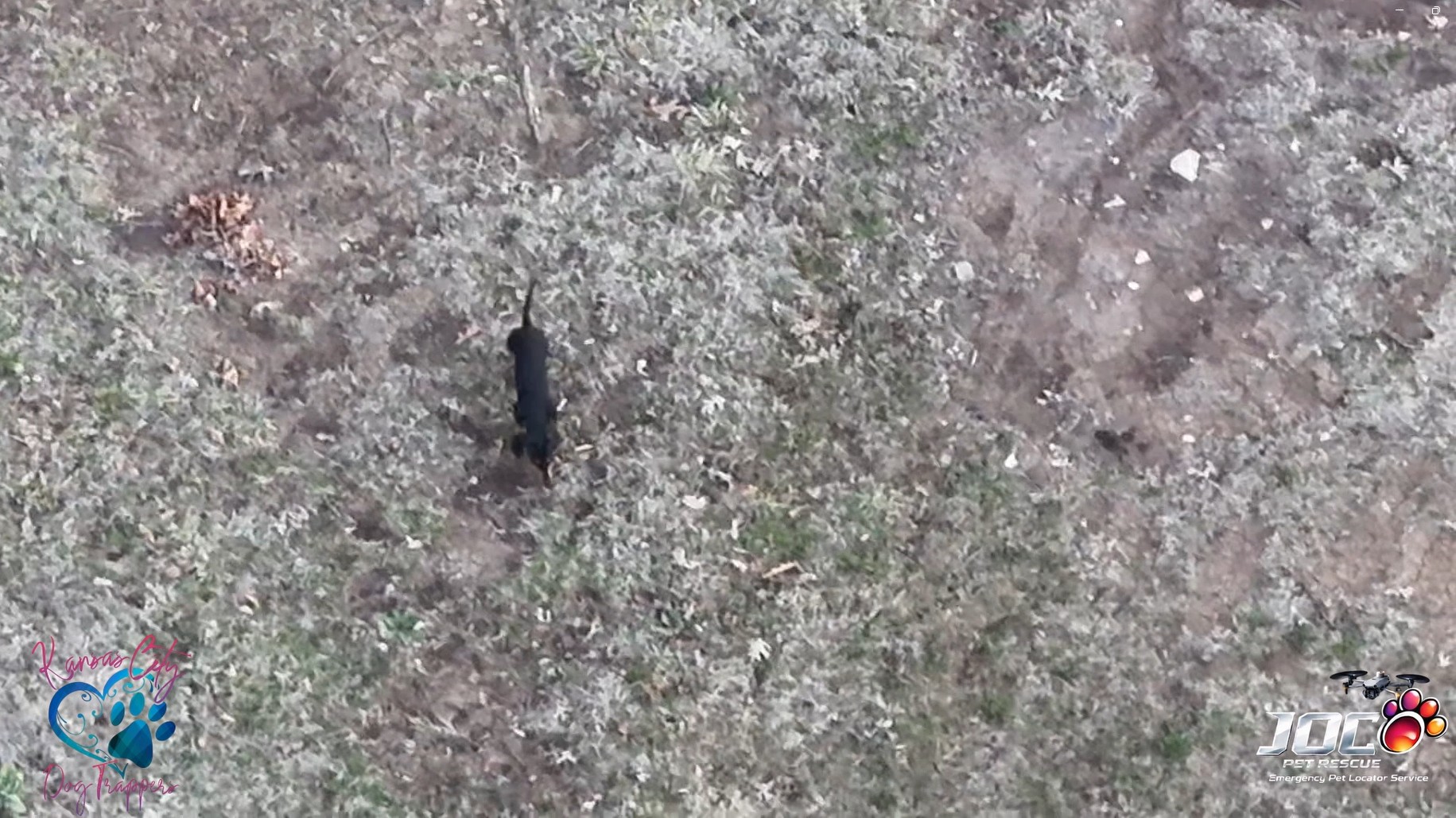
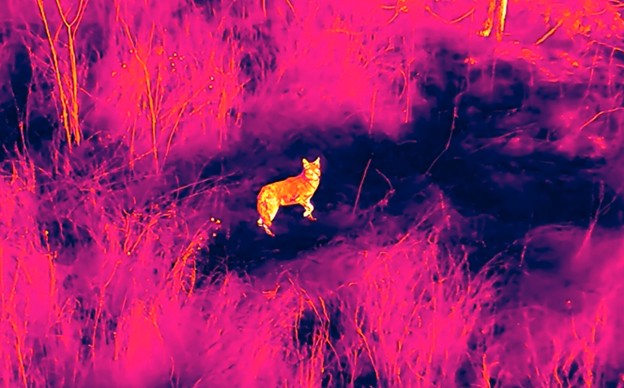
Kansas City, MO Kansas City, KSThermal drone search is most useful in fields, tree lines, parks, creek corridors, large properties, construction areas, industrial edges, golf courses, rural land, and areas surrounding a recent, reliable sighting.
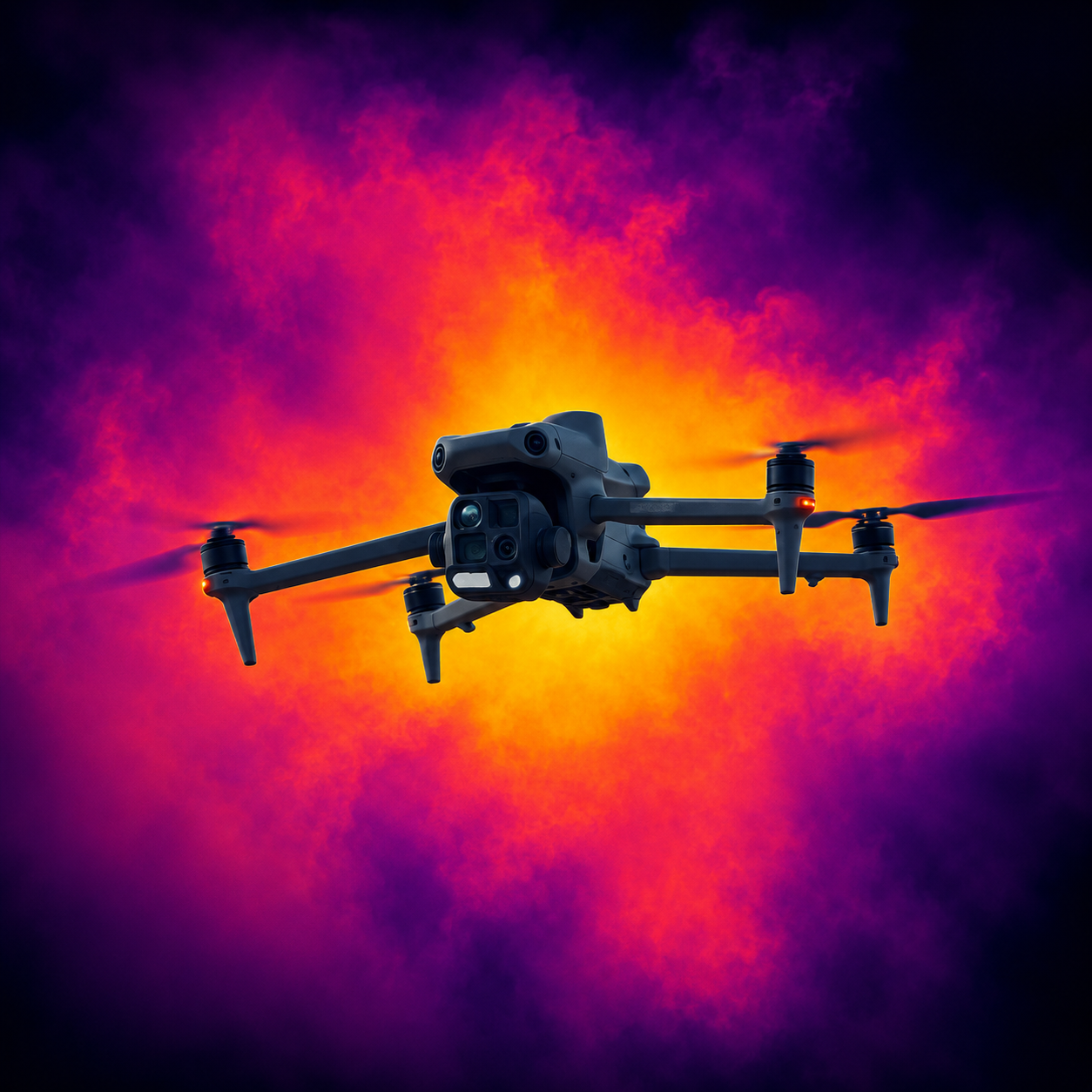

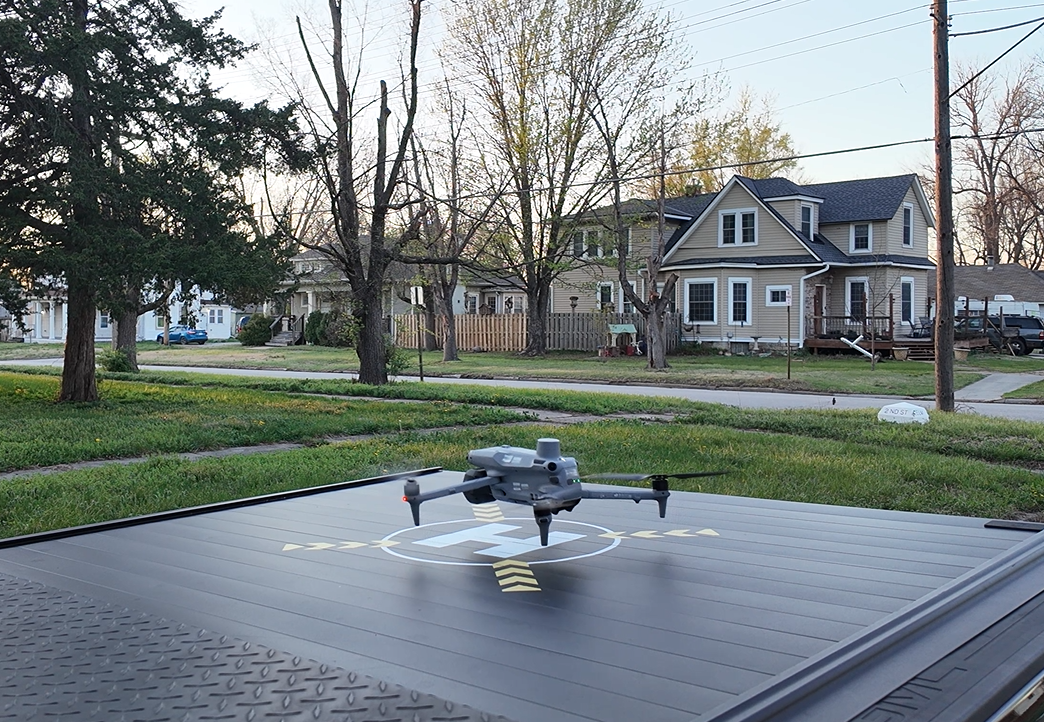
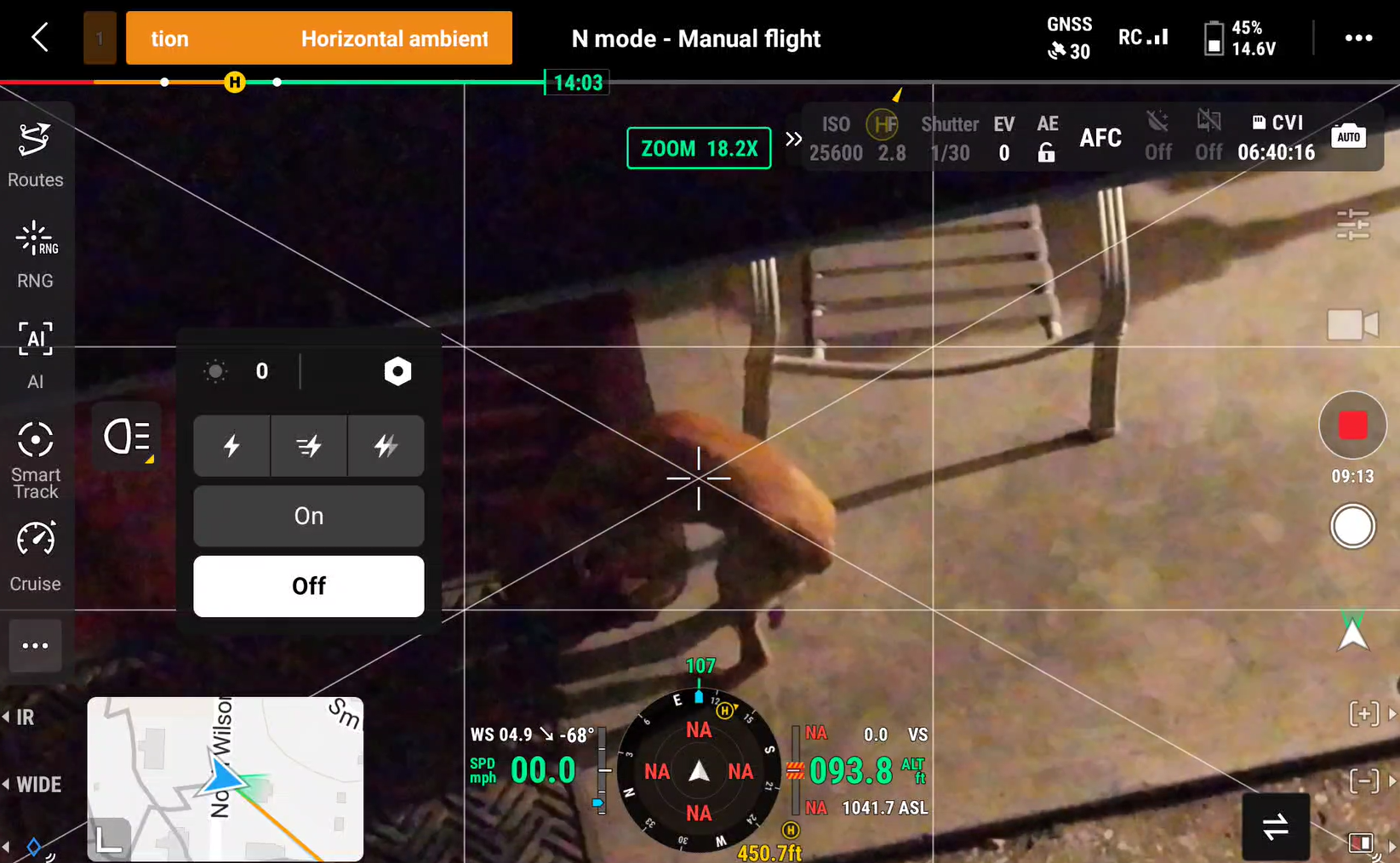
KC Pet Search & Rescue operates with multiple-pilot capability, DJI Matrice 4T and Matrice 4TD thermal aircraft, thermal detection, high-zoom visual confirmation, ground thermal support, search-area planning, airspace evaluation, weather evaluation, and sighting-based deployment.
Learn more about thermal drone search for lost pets and thermal drone pet rescue services in Kansas City.
Finding the dog is not the same as recovering the dog. Locating a frightened dog is a major breakthrough, but the wrong final approach can turn a sighting back into another chase.
Depending on the dog's temperament, the plan after detection may involve:
KC Pet Search & Rescue does not simply arrive and fly a drone. A real recovery plan is built step by step, using the same framework outlined above.

Two verified Kansas-area recoveries show how this framework plays out in the field.

Callie, a seven-year-old rescue dog weighing about ten pounds, went missing from her family in southwest Olathe. She was extremely skittish and unlikely to approach unfamiliar people once frightened. Her Apple AirTag stopped updating, leaving her family without a clear location for two full days.
KC Pet Search & Rescue began a focused early-morning thermal drone search on June 10. The last known AirTag data narrowed the starting area, and thermal aerial coverage checked open ground, vegetation, and wooded edges that would have been difficult to search safely on foot without risking another chase.
Callie was located just 28 minutes into the focused search. Because she was still fearful, the team used calm, controlled coordination rather than a direct approach to avoid pushing her to run again. She was safely reunited with her family, Sharon and Catherine, later that same morning.
Result: Located in 28 minutes after two days missing, safely reunited the same morning.

Izzy escaped from a rural home in Osage County on July 4. Her owner, Grace, contacted KC Pet Search & Rescue as passing rain showers moved through the area, forcing the thermal drone to land and relaunch repeatedly as conditions allowed.
Over roughly one hour and twenty-four minutes of total flight time, the search covered approximately 250 acres of rural property and surrounding fields — far more ground than could have been searched on foot before daylight ran out. Once Izzy was located, the aerial view was used to track her movement and apply gentle directional guidance, encouraging her back across the field toward Grace rather than turning the moment into a chase.
Grace's calm, focused final approach closed the recovery. Izzy was safely reunited with her owner about two and a half hours after the team arrived, despite the repeated weather delays.
Result: Approximately 250 acres searched, safely recovered in about two and a half hours despite rain delays.